"I saw few die of hunger; of eating, a hundred thousand." -Ben Franklin
Showing posts with label health. Show all posts

Thursday, December 29, 2011

Carpe Diem!

With 2011 coming to a close, so many people are making 2012 New Year's resolutions. According to this source (and many others), two of the most popular resolutions are "lose weight" and "get fit," which are both certainly fantastic goals. However, many people who make resolutions may start a new diet and/or exercise plan on January 1st, but they don't change their mindsets as well and will give up after just a few weeks (or, perhaps, only a few days). To make a resolution (health-related or not) work, you must change your entire way of thinking-- don't think of it as a "diet" or a "resolution," but think of it as a total lifestyle change. Don't just eat healthy; live healthy.


I've written about the etymology of diet before: it comes from a Greek word meaning "lifestyle." Yet every January 1st of high school, I'd go on a diet (always low carb) and break my resolution within days or weeks; I'm sure many of you out there can relate. I was only thinking about food-- they were always "I'm going to lose weight by dieting" resolutions rather than "I'm going to change my lifestyle and become healthy" ones. While diet did originally mean "lifestyle," it now has that negative connotation of being a temporary thing, and we thus find it socially acceptable to break our diet-related (or other) resolutions. "No one keeps their New Year's resolutions anyway, so now I don't feel bad for breaking mine too! Let me eat that ice cream!"


The Paleo/Primal/real food lifestyle didn't begin for me on a January 1st-- it actually began on a February 1st (2010), and it's now been almost two years! What turned a diet into a lifestyle was my way of thinking-- I actually told myself on January 31, "Tomorrow is going to be the first day of the rest of my life." I did not tell myself, "Tomorrow I'm going to start dieting again," or "Be prepared to stop eating crap starting tomorrow," or "Brace yourself for the carb withdrawal headaches." I had told myself those things so many times before, but they never stuck-- it was only with a different way of approaching a new eating plan that February 1st, 2010, was, in fact, the first day of the rest of my life.
Not only did I change my eating habits, but I also started moving more (goodbye, elevator!), sleeping more (I seriously think I get more sleep than 95% of college students), ending toxic relationships, and educating myself about evolutionary nutrition. After losing weight, clearing up my acne, never getting sick, and feeling all-around better, I knew that this was definitely a permanent lifestyle change!


So if you're going to start something new this January 1st, don't approach it as a temporary resolution. Think about changing your whole lifestyle , even if your resolution (or goal/plan) isn't health-related-- because what's the point of a resolution if you don't make it stick? And actually, why not start your lifestyle change right now? Why wait until the New Year? Why not better your life beginning at this very moment? The "I'll start tomorrow" mindset won't cut it anymore-- because tomorrow, you'll say "I'll start tomorrow" as well. Seize the day!


I recommend reading Frank Forencich's Change Your Body, Change the World, which discusses how we have become disconnected from the world and how we can have much more fulfilling lives by reconnecting with our environment and becoming healthy through evolutionary wisdom. I also recommend checking out this post from Three New Leaves (one of my favorite blogs), "24 Things I've Learned in 24 Years," which has some amazing and inspiring tips, realizations, and comments about life in general that are really worth reading and remembering. Both the book and the post echo living life to its fullest... and how can that happen with the "I'll start on New Year's" mentality?

I think it's great if you're making a New Year's resolution, and I wish you the best of luck in your quest for a better year; however, start your resolution right now and make it a permanent lifestyle change. You deserve the best life possible, so begin today!

Quote of the Day:
"If you can fill the unforgiving minute with sixty seconds' worth of distance run, then yours is the Earth and everything that's in it." -Rudyard Kipling, 'If'

Wednesday, December 7, 2011

My Psych Class and Bogus Science

I once again apologize for not updating much these last few months. This semester has been a lot more hectic than I had anticipated, but it'll be over in two weeks! I'll hopefully update much more frequently over my holiday break.

I'm currently taking Intro to Psychology to fulfill one of my gen-ed requirements, and the class has been okay up until now-- some of the topics I found really interesting (evolutionary psych!), and others I just kind of suffered through (I'm not a science person, so the neuropsychology stuff wasn't exactly my cup of tea). But in all of the topics covered thus far, the information was scientifically proven-- we know, for example, which parts of the brain control which processes. So even though if I didn't understand everything perfectly, there was at least scientifically proven research to back up this information, and I can accept that it's all true.

So why am I talking about my psych class? For the past two lectures, my professor has been talking about food. The second he announced the topic, I said to myself, "Uh oh, get ready for a ton of Conventional Wisdom crap." And I was, unfortunately, correct. He lectured about the calories in/calories out theory (which is false-- watch this link from Fat Head and pick up Good Calories, Bad Calories and/or Why We Get Fat), that fat is unhealthy (also false-- click here, here, here, and watch this clip from Fat Head), that the BMI system is a good indicator of a person's health (also false-- click, and remember that BMI doesn't take into account muscle), and that the obesity crisis wouldn't exist if everyone ate the equivalent of three apples less per week (um...... WHAT!?!??!?!?). Needless to way, it was a very frustrating few days in psych. Where was any of the science behind this!?!? How can someone actually spread that information without having the facts?


What really baffled me was that my professor also acknowledged that people have no training health and nutrition, yet lectured about this topic and made no sense at all. Well, yeah, of course people don't have training-- the movie Food Matters said that only 6% of doctors have nutritional training, so why would anyone else be informed when they can just get information from the equally uninformed (i.e. the other 94%)? It's so sad that people are clueless about health and nutrition; instead, they rely on Conventional Wisdom, uninformed doctors, and Dr. Oz, and don't have the science to back up their choices. (It also doesn't help that the government is spewing crap to us too-- tomato paste on pizza can now count as a serving of vegetables!) I really don't blame my professor for lecturing Conventional Wisdom BS-- it's probably what was fed to him and no one ever pointed out the flawed science. (I raised my hand to comment on the things he was saying, but the class is in a huge lecture hall and he never saw me. Ugh!!)

The information about evolutionary nutrition is out there and makes sense! Humans aren't adapted to eat grains, legumes, chemical-heavy food products, or low-fat anything. We didn't evolve to count calories or carbs or have other people tell us that we need to be a certain weight for our height in order to be considered healthy. And we certainly didn't evolve to take meds for things that can be cured by simply eating the way our ancestors did. Read any of the literature available-- Loren Cordain, Robb Wolf, Mark Sisson, Nora Gedgaudas, Weston Price, Gary Taubes, and a host of brilliant Paleo/Primal/ancestral bloggers (Chris Kresser, Jack Kruse, Stephan Guyanet, Denise Minger, and Chris Masterjohn, just to name a few) all can back up claims about this lifestyle with real science. Although all of their views may differ slightly, the basics are still there: eat the food that we were evolved to eat, and check out the science to prove it.

Here's Mark Sisson's new food pyramid, as one example of what real food is:

But would people knowing the science really change anything? Sadly, I doubt it-- people know junk food is bad for them, yet still eat it anyway. However, it would still be a huge step in the right direction if A) doctors were trained in evolutionary nutrition, B) the government got rid of the ridiculous food plate and actually learned evolutionary nutrition as well, and C) some type of Paleo/Primal/ancestral literature became required reading in schools/health classes. While people would probably still make poor dietary choices, at least they'd know which foods are actually good (read: NOT LOW FAT) so they can make educated decisions if/when they decide to embark on a journey to better health.


Quote of the Day:
"Do not believe in anything simply because you have heard it. Do not believe in anything simply because it is spoken and rumored by many. Do not believe in anything simply because it is found written in your religious books. Do not believe in anything merely on the authority of your teachers and elders. Do not believe in traditions because they have been handed down for many generations. But after observation and analysis, when you find that anything agrees with reason and is conducive to the good and benefit of one and all, then accept it and live up to it." -The Buddha, Siddhartha Gautama

Monday, November 14, 2011

My "Toss the Scale" Moment

For a long time, I both hated and was obsessed with the scale. I thought whatever number flashed in neon colors at me was magical and determined how I felt about myself. I remember being in seventh grade and getting on the scale for the first time in awhile, wearing a brand new pair of size 17 jeans (I'm pretty sure I didn't wear jeans through sixth and half of seventh grade because I liked the comfort/room of sweatpants)... and seeing a pretty high number. That killed me! I had known, of course, that I was heavy-- especially going to a school where there were only 18 girls in my entire grade, I stood out. I also did ballet, and I most definitely stood out there too. The scale, however, solidified it for me.

It was those size 17 jeans and that pretty high number (at the time) that made me first go on Atkins. Thirty pounds and quite a few sizes smaller later, I didn't stand out anymore. But, of course, I couldn't keep up the low-carbing. I started working at Dunkin Donuts in eighth grade, then went to high school (where I was introduced to carby cafeteria food and essentially lived on pizza and Subway during theatre season) and stopped dancing... By the summer of junior year, I was back up to that size 17-- but was 40 pounds heavier than I was at my heaviest in seventh grade! How the hell could that possibly work out?


Long story short, I yo-yo low-carb dieted junior and senior year, but stayed pretty much in the size 12-16 range. Then I started my quest for weight loss and health second semester of freshman year of college (i.e. through Paleo/Primal/real food), and have never looked back. I also stopped weighing myself at some point last year because it was silly-- why should I go by a number? I knew I was healthy, and I've been out of plus-sizes since early 2010 for the first time since that weight loss in seventh grade... so what was the point?

Today solidified why the scale is stupid. I had to get my vitals taken today so a health form for my study abroad program could be signed, and it turns out I am three pounds lighter now than I was at my heaviest in seventh grade!! I was a size 17 then... and a size 6 now. WHOA.


Clearly, that number on the scale means nothing. It doesn't measure health. It doesn't measure your clothing size. It's completely pointless and only serves to stress people out that they're "fat" if they see a certain number. So stop obsessing over a number, especially if you're working out and building muscle, because muscle weighs more than fat! Want more proof? Check out Everyday Paleo's "Attention Scale Addicts, Part 2."


So toss the scale. If you're keeping track of your progress, buy a measuring tape instead and go by inches-- not weight-- lost. Sure, it's awesome to say "I lost [insert #] pounds," but what does that even mean? Nothing, really! I think it's so much more of an accomplishment if you can say "Well, I didn't lose any weight, but I lost [insert #] inches and am now [insert #] sizes smaller!" That number on the scale doesn't represent anything, so please don't freak out about it! Just get rid of it! You are more than a number!


Quote of the Day:
"You yourself, as much as anybody in the entire universe, deserve your love and affection." -The Buddha

Thursday, October 13, 2011

Ron English's Cereal Boxes


If you recognize that obese version of Ronald McDonald, it may be because you've seen Super Size Me, Morgan Spurlock's documentary about only eating McDonald's to prove that fast food causes obesity. (Please, please, please watch Tom Naughton's Fat Head, which is not only incredibly informative, but also shows why Spurlock's arguments were flawed.) I'm not blogging today to talk about Super Size Me or any other food documentary, however-- I'm going to be talking about the artist behind the obese Ronald McDonald, Ron English, who came out with a new piece of "popaganda" this week that really relates to the obesity crisis.


The brilliance of this piece is that, at first glance, it looks like a regular shelf of cereal boxes. Look more closely, however, and you'll realize that Capn' Crunch is "Cap'n Corn Starch" and Frosted Flakes is "Sugar Frosted Fat," and that most of the cartoon characters, like Ronald McDonald, are obese. English, who is known for manipulating brand advertisements to reflect the truth, has put these altered boxes throughout a supermarket in California... and this move has gained a lot of attention. This photo has circulated all over the internet, and it even showed up on the front page of MSN. Here's a screen-shot I took of it, which includes an MSN poll about cereal:


Based on this poll, only ten percent of people don't eat cereal. And those 17% who eat "healthy" cereals are probably eating crap with ingredients lists like this:
^^That's Kashi GoLean, one of the supposedly "healthy" cereals that is advertised like crazy as "a good source of whole grains" or "a good source of fiber" or B.S. like that... when in reality, it's just fake food that'll spike your insulin levels and make you sick (and all of that soy is so unhealthy too!).
But I digress. Ten percent of people don't eat cereal (based on this poll)! So that means ninety percent of people do-- and that, ladies and gentlemen, is English's point. With the obesity levels rising like crazy in the U.S., it really shouldn't be a surprise that cereal, arguably the biggest breakfast staple out there, is a main culprit. It's convenient (throw it in a plastic bag and go!), it's addicting (carbs and sugar are addicting-- hence the "low carb flu" people get when they cut these out), the advertising draws in kids (bright colors and cartoon characters are always a hit)... oh, and most of them are "fortified with vitamins and minerals" (insert eye-roll). Society doesn't vilify cereal the way it does fast food-- yet cereal is just as bad, if not worse!

Here are some real cereal statistics, from Cerealizing America by Scott Bruce and Bill Crawford:
"-Americans buy 2.7 billion packages of breakfast cereal each year. If laid end to end, the empty cereal boxes from one year's consumption would stretch to the moon and back.
-The cereal industry uses 816 million pounds of sugar per year, enough to coat each and every American with more than three pounds of sugar. The cereal with the highest amount of sugar per serving is Smacks, which is 53% sugar.
-Americans consume about 10 pounds, or 160 bowls of cereal, per year per person.
-49% of Americans start each morning with a bowl of cereal."

Let's examine one of the other brands that English targeted, Lucky Charms (or "Yucky Children Charmer"). This cereal was one of my all-time favorites pre-Paleo-- the song on the commercial was catchy, the marshmallows were addicting (even though they kind of tasted like cardboard... huh...), and I just loved everything about it. However, if I ate a big bowl of Lucky Charms in milk for breakfast at, say, 6:45 before school, I'd be ravenously hungry again by 8:30 or 9:00. Here's the label:
Let's see... high in carbs, a ton of sugar, a bunch of ingredients that I don't recognize (oh, wait, "color" is a food?), and corn syrup... amongst other things. But it's "made with whole grains, [it's] fortified with 12 vitamins and minerals, and is a good source of calcium." Seriously, General Mills? You're trying to pull this off as healthy? Give me a freaking break.
Kids see the cute leprechaun, the bright colors, and the promise of marshmallows, so they bug their parents, who then see that this cereal has health claims* and buy it for their kids. The kids then have crazy sugar highs (and crashes), can't sit still or concentrate, and are starving again a few hours later. Sound familiar? (And, of course, this isn't even mentioning all of the other learning and behavioral issues that are results of processed, sugary, chemical-laced foods!)
The most ridiculous thing about Lucky Charms is that, despite the claim by General Mills that they've been making their cereals healthier since 2005, they can't reduce the sugar in this particular cereal anymore because, according to The Wall Street Journal, "not only do the cereal's frosted oats need to taste sweet enough to keep kids clamoring, they have to float in milk for at least three minutes." Um... Just think about that for a second. They want their "food" to "float" for at least three minutes. WHAT THE HELL!?!??!?
*Note: One of Michael Pollan's food rules is to avoid foods that make health claims. Based on Kashi and Lucky Charms, can you see why? (Actually, I'm pretty sure cereal breaks all of Pollan's rules.)

I recently finished Wheat Belly by Dr. William Davis, which essentially argues that wheat is the biggest culprit of weight-gain due to "high glucose and high insulin," "cycles of satiety and hunger... this is the foggy, irritable, hungry hypoglycemia that occurs 2 hours after your breakfast cereal...," "gliadin proteins," and "leptin resistance." (His blog is pretty great, so here's the link to the full post.) Think about it: does a bowl of cereal or a slice of bread really cure your hunger? Of course not! So you keep eating more wheat, and the cycle never ends*-- more food, higher insulin levels, more weight gain.... and bam, you're diabetic and obese. While I don't completely agree 100% with "lose the wheat, lose the weight" (there are so many other foods and factors for weight loss too), getting rid of wheat-based products (i.e. cereal and most processed food, which contains wheat) will eliminate carb addiction, help regulate insulin levels, improve satiety, and help with curing certain Western diseases (like type 2 diabetes).**
*Note 1: The night before I went Paleo/Primal/LCHF/JERF, I had a huge bowl of Fruity Pebbles for dinner. An hour later, I was still starving so I went and got a hoagie from WaWa. Yes, cereal was the second to last thing I ate pre-this lifestyle. I am never, ever going back to that! The cycle of needing to eat every few hours was horrible!
**Note 2: Other grain-based products have wheat-like effects too... like corn. Yes, corn is a grain; it is not a vegetable. If you're looking to lose weight or heal your gut, I'd suggest eliminating all grains (and gluten!), and not just wheat products.

I think what Ron English did was awesome. While I don't think his piece of popaganda will change anything in this country, I think it's great that the ridiculously unhealthy properties of cereal are being vilified and are finally in the news. If his cereal box artwork encourages just one person to make healthier choices, then it is absolutely a success. Hopefully, though, it encourages many more people to stop eating these fake, processed, sugary, nutritionally inferior foods!

Ron English's take on Fred Flintstone:


Quote of the Day:
The Dalai Lama, when asked what surprised him most about humanity, said, "Man. Because he sacrifices his health in order to make money. Then he sacrifices money to recuperate his health. And then he is so anxious about the future that he does not enjoy the present; the result being that he does not live in the present or future; he lives as if he is never going to die, and then dies having never really lived."

Saturday, April 30, 2011

Reflections on the Last Four Semesters/My Paleo Journey

Classes ended this week, which means I'm now halfway done with college. As I reflect over the last two years, I realized that I've made a lot of life changes that have left me happier and healthier than I've ever been before.

Paleo and my health/nutrition passion changed my life. I'm physically much healthier than I was fifteen months ago, but my whole outlook on life has changed as well-- I'm much more positive, I worry less, and I enjoy things a lot more now in general. I feel like a completely different person.

I started college 50 pounds and 5 sizes bigger than I am now. Like any new college student, I went crazy on carb-loaded, sugary foods-- cereal and pizza were eaten at any time of the day, Wawa milkshakes and Insomnia Cookies were the best 2am snacks, and Ritz crackers and Nutella were my favorite food groups. I rarely, if ever, got enough sleep-- I was constantly exhausted, stressed out, and suffering from colds and mood swings. I was sedentary, putting on the Freshman Fifteen, and not really caring about what I ate in the least bit. I can always just go low carb one day and I'll be fine. No problem, I told myself. I've done it a million times before. So the semester ended and I went from eating a ton at school to eating a ton over the holidays.

By January, my jeans barely fit and I felt sluggish all the time. I was getting a bit more sleep than the previous semester, but I was still almost always exhausted, sick, and moody. I remember my last night on the SAD: January 31, 2010. I'd eaten a bowl of Fruity Pebbles for dinner (I'm shuddering at that thought right now), but was still ravenously hungry... so I went to Wawa and ate a hoagie as well. What the hell was wrong with me? Disgusting! That's when I made up my mind: tomorrow would be the first day of the rest of my life. Of course, I'd told myself this a million times before, always with the same result: I'd eat low-carb for a month or so, lose some weight, then go right back to the SAD and be even heavier than before. But, as I've mentioned in some of my previous posts, February 1, 2010, actually was "the first day of the rest of my life."

I always talk about how awesome Paleo is (because it is!) and how fantastic I feel, but it hasn't always been so easy: that first semester of healthy eating was really, really freaking difficult. Eating low carb (which somewhere along the line turned into the Caveman Diet) in an SAD world was extremely isolating. "No, I don't want to order pizza. No, I can't go out for fro-yo. No, I don't want to make pasta and popcorn. Yes, all I'm eating for dinner is salad and a piece of chicken. No, I'm not crazy-- I swear."
I developed major food and social anxiety-- it was easier for me to not go out at all than to have to deal with food-related situations (which, at college, is almost all of them). This was before I discovered the Paleo/Primal community, so I felt really isolated, anxious, and alone-- and that carried through the summer, where I had to deal with my friends from home telling me to "just eat a sandwich" or that "a little ice cream won't kill you." God, that was difficult. I didn't want to go out, I didn't want to see anyone... and I didn't want to talk about it because I was so afraid of being lectured again or having people think I was even crazier than they did already. So I spent my first six months eating like a cavewoman feeling totally out of my mind and living as a hermit as much as possible. I was still coping with my big lifestyle change and I was still trying to grow into my new body-- I still saw myself 50 pounds ago and would wake up every morning amazed at the size of my new jeans.

End of the Fall, 2009 semester vs. End of Spring, 2010 semester

About a week before the fall semester started, it was like a switch flipped in my mind-- the anxiety went away and I no longer saw that former fat girl in the mirror. I realized recently that it was because I was no longer speaking to some of the people who caused a lot of my anxiety and brought a ton of petty drama and negative energy into my life (mostly because Penn starts later than most schools, so no one was around much that late in the summer)-- I could just focus on me without hearing the constant lectures and unnecessary BS. I cut my hair short for the first time in years; I went shopping for some new clothes in bright colors (after years of only wearing black because I wanted to look thinner). I wanted to put my SAD life and my former negativity behind me for good-- almost seven months after February 1, I knew this wasn't just a temporary thing. I was ready to start my third semester healthy, happy, and feeling a hell of a lot better. Would social events still be an issue? Would people still think I'm insane? Absolutely. But after spending months adjusting to this lifestyle, I knew I was really healthy... so to hell with people's opinions! People thought Socrates and Columbus were insane too-- it's only a matter of time before CW, SAD-followers come around to Paleo and realize that we're right.

My passion for nutrition, which had slowly started over the summer, became full-blown in the fall. Not only was I feeling great and being more social, but I was becoming more informed about nutrition-- I spent my free time reading up on health/nutrition online, subscribing to newsletters, and spending my Fall Break reading Michael Pollan. I was getting a lot of sleep, staying active by taking the stairs up to my 13th-floor dorm room multiple times a day, and keeping the anxiety-causing people away. I just felt like a better person. It's amazing how much things change when negative energy is removed! (I met up with a friend over Christmas break that I hadn't seen in a long time, and she said something along the lines of "You're not as negative and cynical anymore! You seem so happy!") So I spent the semester kicking ass grade-wise, feeling happier and healthier than ever before, and falling more and more in love with health, wellness, and nutrition. (I even went Primal vegetarian for awhile after reading a ton of "vegetarianism is so healthy!" books/articles... except it just made me feel sick. Bleh.)

I also rediscovered a lot of my former passions and developed new ones. A question on PaleoHacks yesterday made me think about this, because once I really transitioned to the Paleo/healthy lifestyle, my "spare-time was totally reinvented." I've been playing a ton of piano and writing a lot of poetry these last two semesters-- I hadn't done much of either my first year of college. I developed a love of cooking, and I am so excited to cook a lot at home this summer. I also enjoy the outdoors more-- for example, I spent all of today outside in the sun, playing kickball and frisbee with my friends (something I'm pretty sure I never would've done last year). I now love taking walks, going for runs, reading in the sun, being outside. I truly believe that Paleo is the "spice of life" and is just another reason to adopt this lifestyle.

January, 2011. Semester 4 of college and still eating as far away from the SAD as possible! For almost a year, I hadn't counted carbs or calories and I was eating so much without ever putting on weight. This lifestyle was awesome! But I was still Primal vegetarian (as in... take the Primal rules and just substitute meat for tofu) and suffering from IBS-like symptoms. My dad sent me Cordain's The Paleo Diet via Nook and, well, the rest is history. I discovered the Paleo/Primal/Caveman community and realized that there are other people out there who are just as passionate about this lifestyle as I am. A ton of networking, books, and blogs later, I've never been happier. This has been such a phenomenal, Paleo/health-filled semester, and I couldn't have asked for anything better.

So why am I talking about this now, over a year after my Healthy Living journey began? Because I want to thank all of my readers and the Paleo/Primal community for making this semester my best one so far. I also want everyone-- especially those new to or thinking about making the change to Paleo/Primal-- to know you are not alone. There are people out there-- on the internet, in your own community, staring at you from bookshelves, going on TV and radio shows-- that are just as health-conscious as you are. Nothing has made me happier than finding the Paleo community this semester, and I wish I had become a part of it when I first embarked on my Paleo journey.
Can the transition to Paleo be difficult? Will your friends, family, and peers think you've gone crazy? Of course. Making a major life change is never easy! But this is a life change that is for the better. Once you get through the transition period, I guarantee that you will look and feel-- both physically and mentally-- better, and this will be a permanent thing. Don't give up, and don't feel like you're going through this alone, because you're not. Sign up for blog updates, join a Paleo meet-up group in your area, try to get someone to transition with you, read Everyday Paleo, check out PaleoHacks, subscribe to the new Paleo Magazine, hold a Paleo potluck meal with your friends and family, get rid of anyone or anything that causes negative energy or weighs you down more than the SAD. Don't listen to Conventional Wisdom and don't let your SAD friends bully you back into eating whole grains and processed crap. Stay strong, and don't give up-- you can do this! Thousands of people all over the world have transitioned to Paleo and changed their lives for the better, so reach out and don't go through this alone! The Paleo community is always looking for new enthusiasts, so come join us!

Quote of the Day:
"Happiness lies, first of all, in health." -George William Curtis

Kind of sums it up:
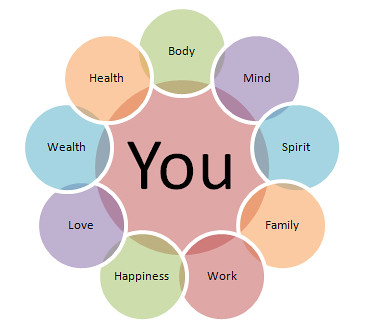
(This post is participating in the Primal Den Blog Carnival.)

Thursday, April 7, 2011

Paleo: An Immune System of Steel

Oh, college-- a place where stressed out and sleep-deprived students live in close quarters, share everything, and classify Ramen noodles and Nutella as their own food groups. College is also a place where everyone seems to be sick-- colds, strep, mono, and the flu are always "going around" and never seem to go away.

Funny. I seem to be the only one pretty much immune to these sicknesses.

No, really. People are always asking me how I manage to be the only healthy one in a sea of colds, coughs, and fevers. And the answer, always, is a simple one: I don't eat crap.

During my SAD years, I suffered through a lot of colds. My immune system, which had been running on bread, cereal, and bad carbs galore, wasn't that strong-- sure, I never really got anything worse than colds, but sometimes they would last for weeks! Vegetables and fruits were rarely eaten; meat was always accompanied by a ton of starch. Even during my various attempts at Atkins, my body was fueled partially by chemical-laced food products... so I still got sick.

Since I've turned to the Paleo lifestyle, my immune system has become like a fortress-- not even all of the germs going around campus can attack it. In the last fourteen months, I've had one cold (which was during my brief Paleo-ish vegetarianism experiment... cut out meat, and get sick, perhaps?) that only lasted for a few days. That's it! Before Paleo, I probably had six to ten colds per year, each lasting for quite awhile. Eat well, be well. Let food be thy medicine and let medicine be thy food!

Of course, Paleo doesn't ward off sickness 100%. However, eating in this manner will strengthen your immune system to the point where if you do happen to catch a rare cold, it will be a lot less severe than you're used to. Your body will be getting all of the antioxidants and nutrients it needs to run smoothly and, in turn, keep you healthy. The cavemen weren't sickly like today's SADers!!

It's clearly not the dorms, late nights, or stress making everyone around here sick. It's the Ramen and Nutella.

Quote of the Day:
"The palaeo diet can be great. If we were still eating that diet, I'm certain we wouldn't be getting as ill." -Ray Mears

Self-explanatory:

How I stay healthy:

Thursday, March 31, 2011

This Week: Paleo on the Internet

The Internet has been exploding (more than usual) this week with Paleo-related articles, musings, blogs, results, and information. Take a look!

Naturally Engineered has posted the results to the 2011 Paleo Community Survey, and the results are pretty fascinating. Here are some of my favorites:
-The numbers of men (51.94%) and women (48.06%) were very close. This clearly isn't just a caveman diet!
-A very large percentage (42.76%) learned about the Paleo lifestyle in 2010, which is a huge increase from the 25.77% who reported learning about in 2009.
-The largest percentage of people (37.52%) learned about Paleo from blogs... and 85.34% prefer to get their information from blogs too. Yay blogging! (However, I'm glad to see that 76.47% of people prefer books too!)
-74.68% of people believe that Paleo is a sustainable solution for feeding a large population.
-The majority of people believe that Paleo will never become mainstream (54.03%).
-63.98% of people seem to use the 80/20 principle, and 23.06% consider themselves 99%+ Paleo.
-55.63% reported eating less than 50 carbs a day.
-33.39% were former Atkins/LCers, and 27.54% were former vegetarians.
-85.21% said they do NOT consume sugar-free drinks or diet sodas. GOOD!
-75.61% of people reported getting 7 or 8 hours of sleep a night... and 79.85% reported increased energy levels. That's awesome!

Perez Hilton (yes, the celebrity gossip guy) posted about Paleo on his site earlier this week. It was quite a short article, but I can't believe all of the ridiculous things he said. Like:
-"So really all you can eat is meat and veggies." Um... no. How about fruits, nuts, seeds, and spices? I hate this misconception!
-"It's pretty much the Atkins diet minus the cheese." SO false. See my last post.
-"But whole grains are good for you." That's also false. He is clearly misinformed and just listens to Conventional Wisdom. Ugh. Check out this link from Mark's Daily Apple.
-"Also, caveman all died really early! We live way longer than the cavemen! Why would we eat like them again?" Besides the fact that it should be cavemEn and not cavemAn (sorry, I can't help but pick on his spelling too...), the cavemen had a lower life expectancy because A) They didn't have modern medicine/conveniences, and B) They were being chased and killed by wild animals. And why should we eat like them again? Because they were leaner, taller, stronger, and much healthier than people are today too. They didn't suffer from all of the diseases and health problems that plague our society!

Which brings me to the next link I'd like to share! Dr. Kurt Harris of the fantastic PāNu site released Paleo 2.0 - A Diet Manifesto yesterday, and I highly, highly recommend reading it. He essentially breaks down the Paleo lifestyle and talks about various misconceptions, the term "Paleo," the Neolithic Agents of Disease, and more. It's extremely well-written, easy to understand (not overly scientific!), and provides a plethora of fascinating and insightful information.

I came across this article a few days ago that starts off with, "Like a cavewoman, I love raw meat." I immediately thought to myself, Paleo! Keep reading! The writer talks about her experience going on a raw food tour of New York City: lamb carpaccio at Morimoto, raw liver and heart at Takashi, live lobster sashimi at Jewel Bako, and chicken sashimi at Yakitori Tori Shin. I don't think I'd ever be able to eat raw chicken or lamb, but at least now I know where to go for NYC raw meat!

There's no doubt that Paleo eaters love meat. However, it turns out Paleo eaters actually eat more vegetables than...... drum roll, please!.......... vegetarians! This post from Paleo Playbook compares four vegetarian food pyramids with four Paleo/Primal food pyramids and finds that "vegetables average (an inflated) 20% vegetable-intake on the pyramid," but "Paleo wins with about 25% vegetables in the diet." He also discusses some factors that could explain why this is, but still-- it's quite an interesting find!

Some other cool Paleo-related links:
-Petition to Request Robb Wolf as a Guest on the Oprah Winfrey Show

Quote of the Day:
"But no one owns the Greek word palaios. The English paleo- is just a modifier. And language evolves. We can use Paleo 2.0 until it means what we want it to." -Dr. Kurt Harris, from "Paleo 2.0" at PāNu

Also from PāNu:

Thursday, March 10, 2011

"The western diet and lifestyle and diseases of civilization"

The Paleoverse (Primalverse?) has been exploding today with a report called "The western diet and lifestyle and diseases of civilization" by Pedro Carrera-Bastos, Maelan Fontes-Villalba, James H. O'Keefe, Staffan Lindeberg, and the author of The Paleo Diet, Loren Cordain. This paper scientifically details how eating the way our Paleolithic ancestors did improves your health and how food created thanks to the Agricultural Revolution harms it. It ultimately concludes "...a diet composed of meat, fish, shellfish, eggs, fresh fruit and vegetables, roots, tubers, nuts, and seeds may be superior to the so-called healthy diets such as the Mediterranean diet." This is precisely why we Paleo/Primal/Caveman enthusiasts eat this way!

Abstract: It is increasingly recognized that certain fundamental changes in diet and lifestyle that occurred after the Neolithic Revolution, and especially after the Industrial Revolution and the Modern Age, are too recent, on an evolutionary time scale, for the human genome to have completely adapted. This mismatch between our ancient physiology and the western diet and lifestyle underlies many so-called diseases of civilization, including coronary heart disease, obesity, hypertension, type 2 diabetes, epithelial cell cancers, autoimmune disease, and osteoporosis, which are rare or virtually absent in hunter–gatherers and other non-westernized populations. It is therefore proposed that the adoption of diet and lifestyle that mimic the beneficial characteristics of the preagricultural environment is an effective strategy to reduce the risk of chronic degenerative diseases.

I strongly encourage you to read this paper to explore precisely why this lifestyle works so well and why so many people are so enthusiastic about it! The western diet and lifestyle and diseases of civilization

From this paper, page 19:


Quote of the Day:
"It is highly unlikely that genetic adaptations that allow us to thrive on a western diet and lifestyle have occurred." -Carrera-Batons, Fontes-Villalba, O'Keefe, Lindeberg, and Cordain

Tuesday, March 1, 2011

SAD (and Other Acronyms)

I've noticed over the last few months that the longer I follow the Paleo/Primal/Caveman/Real Food lifestyle, the more horrified I become with the Standard American Diet. Since becoming a health and nutrition enthusiast during the last year, I cannot believe that I ate like that for nineteen years (minus the millions of dieting attempts). It's no coincidence that the acronym for Standard American Diet is SAD-- it's sad that so many health problems are caused by it, and it's sad that so many people still follow it!

(If you choose to follow the Standard American Diet, I will not condemn you. I will, however, worry about your health and offer my advice about healthier eating if the conversation arises... and I'll probably advocate eating Paleo/Primal as well.)

So what brought about today's post about the SAD (besides my need for a midterm study break)? I was sitting in class and the guy in front of me was eating lunch. Normally I don't really notice when people are eating in class, but the smells of some of the components of his SAD lunch were absolutely overwhelming-- I don't think I've ever had a reaction like that to foods that used to be staples in my pre-Paleo days. This guy had a PB&J sandwich on white bread, a bag of Cool Ranch Doritos, a biscotti, and a Coke. Fake, fake, fake, fake, fake, fake, and more fake. There is nothing Paleo-approved in any of that "food"! How did I used to eat like that?!

I find it fascinating that since I've replaced bread with beef, Doritos with deviled eggs, and biscottis with blueberries, I've stopped all junk-food cravings... and that was thirteen months ago today. Any time I dieted, I spent all of my time wishing I was eating sugary, starchy foods instead, but this has not occurred since turning Paleo-- hell, now I just crave meat, fruits, and veggies. This lifestyle (rather than just another diet) broke my sugar addiction and opened my eyes (well, taste buds) to the plethora of real food options out there that I thought I didn't like because they were so far from the SAD. If you asked me a year and a half ago if I would ever eat vegetables on a daily basis, I probably would've laughed and called you insane! Me? Vegetables? Healthy foods 24/7 with no cheating? Joke! It's truly amazing how much has changed in a year though: if you ask me now if I will ever eat bread again, I'll just laugh and call you insane. Me? Bread? SAD 24/7 again? Joke!

Speaking of the Standard American Diet, I find it incredibly ironic that IHOP's National Pancake Day today raises money for Children's Miracle Network Hospitals. While I'm all for giving money to hospitals, isn't it kind of counterproductive to raise money by potentially causing health problems in everyone who eats those pancakes?

The Food Lovers' Primal Palate asked today via Facebook and Twitter, "In 10 words or less, what does Paleo mean to you?" I responded with the following: Eating well, looking great, feeling awesome, being healthy, permanent lifestyle. I'd say that's the exact opposite of both being sad and living on the SAD!
So because I really don't want to go back to studying, I've come up with a few acronyms for Paleo:
Powerful, Awesome, Lean Eaters Only
Protein Addicts Living (and) Eating Organic
People Avoiding Lethargy, Exhaustion, Obesity
Proud Association (of) Lively, Energetic Omnivores
Population Aware (of) Living Exclusively Outstandingly

And here are a few for Primal:
Person Realistically Imitating My Ancestors' Lifestyles
People Really Indulging (in) Meat, Animals, Lard

Quote of the Day:
"He who has health, has hope. And he who has hope, has everything." -Arabian Proverb

Something really cool: I originally saw this on Primal Palette's page, but it's popped up on multiple Paleo/Primal blogs in the last few days... Enjoy!

P.S. Art DeVany and Robb Wolf will be on ABC's Nightline tonight. Go watch!

Tuesday, February 15, 2011

First Post!

Hey everyone!

I've been contemplating starting this for quite a few months, and am really glad I finally decided to do it. This blog pretty much will chronicle my experience eating Paleo/Primal both here at college (University of Pennsylvania in Philadelphia) and at home (in Westchester County, New York, right outside of NYC).

So here's a little bit of background:
I've been eating Paleo for over a year now (February 1, 2010!... minus two months of almost-Paleo vegetarianism, but I'll discuss that in a bit), but only recently learned that my eating habits aren't totally extreme and actually have a name (well, names...)/philosophy behind them. In the last month or so, I've read every Paleo/Primal book available for Nook (including works by Loren Cordain, Art DeVany, Robb Wolf, Frank Forencich, and Mark Sisson), subscribed to every Paleo/Primal blog I can find via twitter, and have become even more health/nutrition-obsessed than I thought possible.

Changing my eating habits changed my life. I've struggled with weight for pretty much ever (I blamed genetics, but it was completely my fault: I was a carb-addict, and working at Dunkin Donuts for 3.5 years certainly didn't help!), and every time I went on a diet (always Atkins-- did that for the first time when I was thirteen and lost 30 pounds), I'd put all the weight back on... plus a lot more. (At my heaviest, when I was sixteen, I was 70 pounds and 6-7 sizes bigger than I am now.) With diabetes and heart disease running in my family, I knew my eating habits and inactive lifestyle would eventually lead to severe health problems... hence the millions of dieting attempts.

Enough was enough. February 1, 2010, I decided (for probably the trillianth time), "Today is the first day of the rest of my life." And, for the first time, that came true. One year and fifteen days later (and 50+ pounds and 5-6 sizes smaller), I can happily say I've successfully avoided all breads, sweets, starches, pastries, grains, and other types of fake food! (And for those of you who are in/have gone through college, you know how fake food temptations are everywhere!) My lifestyle now can be summed up by one of my favorite Jack LaLanne quotes: "If man made it, hate it."


However, I went through a two-month period of vegetarianism (though staying low-carb... the only "man" food I ate was tofu) after reading Michael Pollan's books, various newsletters by nutritionist Jay Robb, and reading a plethora of articles on the subject. I didn't feel satisfied, however-- I was tired all the time, experienced almost-daily digestive problems, and found myself snacking more than usual.
Then a few weeks ago, my dad (a fellow nutrition/health enthusiast) sent me Dr. Cordain's The Paleo Diet, which I devoured (no pun intended) one night... and haven't looked back to vegetarianism since. Ever since then, I pretty much went back to eating the way I did for 10 out of the last 12 months. I feel more energized, my digestive problems are gone, and I stopped snacking. Paleo/Primal, for the win!

So that's my story. I'm really excited to finally do this blog-- I'll be posting recipes, book reviews (currently reading Why We Get Fat by Gary Taubes... will review when I'm done!), restaurant reviews (on the rare occasions that I don't eat in my dining hall), and thoughts on other nutrition and health issues.

So what was for dinner tonight? Baby spinach salad with beef, chopped egg, tomatoes, diced onions, and pecans, drizzled with EVOO. (You can't really see the tomatoes or onions, but they're under all the fantastic beef!)


Quote of the day:
"We don't know all the answers. If we knew all the answers, we'd be bored, wouldn't we? We keep looking, searching, trying to get more knowledge." -Jack LaLanne