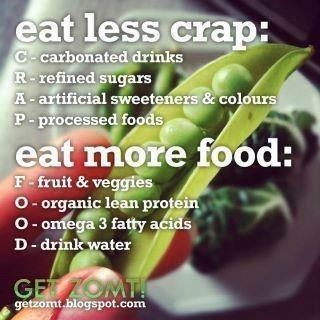
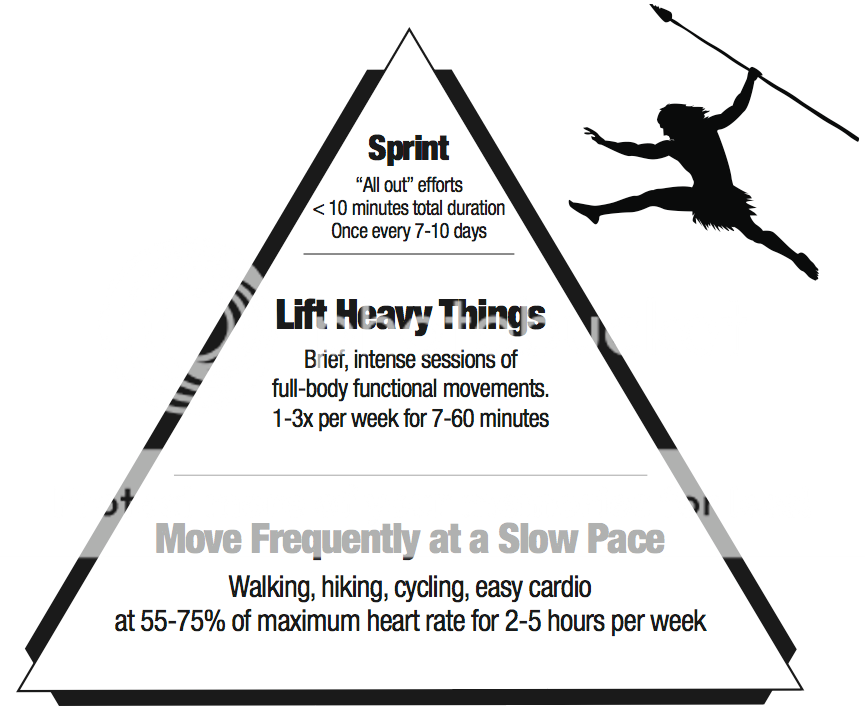
"I saw few die of hunger; of eating, a hundred thousand." -Ben Franklin
Showing posts with label primal. Show all posts

Saturday, July 28, 2012

The Template: The Choice Is Yours

In my last post, I wrote about how I was going to go back to eating simply again (just animal protein and vegetables) due to my addiction to Paleo/Primal baked goods and sweet things (like fruit and sweet potatoes).  Since eliminating nuts (and nut flour-based desserts), dark chocolate, tubers, and fruit, I was able to clear up a rash on my arm that only appeared after eating the aforementioned foods in excess, and was also able to break my snacking habit.  Most importantly, however, this elimination experiment really cemented the fact that I cannot have sweet foods.  Ever.  Period.

One of the things I love the most about the Paleo/Primal/ancestral lifestyle is that there's no "one size fits all" way to eat.  Eating plans are like snowflakes: no two are exactly the same.  I don't do well with nuts and tubers, whereas other people don't feel well without them.  I stay pretty low carb (less than 30 a day) most of the time, but I've read stories of people who become irritable or moody unless they have a ton of fruit or sweet potatoes.  My eating plan does not include fish (I simply don't like it), but maybe yours doesn't include pork or chicken or beef.  I cook most of my food, but there are plenty of raw ancestral eaters as well.  Et cetera, et cetera, et cetera!  The leaders of the ancestral movement each have slightly different eating plans too.  Some include dairy (e.g. Mark Sisson's Primal Blueprint) or (white) potatoes (e.g. the Perfect Health Diet) or a lot of fat; others are low-carb or raw or similar to Weston Price or GAPS.  Some are specific to athletes or people with autoimmune conditions.


I've had people tell me that they could never try this lifestyle because they don't like [food X] and are allergic to [food Y].  Hey, it's totally cool if you can't/won't eat certain foods-- just pick something else!  There are countless types of fruits and vegetables, many types of animal protein and a ton of ways to prepare them ("you can barbecue it, boil it, broil it, bake it, saute it..."), and you don't need to eat nuts or tubers or dairy.  That's the beauty of the ancestral/Paleo template-- it can be tailored to your individual needs and taste buds.  There is general agreement that glutinous grains, refined sugar, processed/chemical-laced foods, legumes, and industrial seed oils are bad for you.  But outside of those, your eating plan is totally up to you.


Experiment!  Try cutting out dairy or nuts or nightshades to see what makes you feel at your best.  Taste new foods: you never know what you might love if you never give it a chance (or another chance-- just because you didn't like it as a kid doesn't mean you won't like it now).  Play around with different combinations of animal proteins, vegetables, fruit, nuts, and seeds until you achieve your goals.  Cook or don't cook, high carb or low carb or no carb, dairy or no dairy, sensible vices or Whole30-style... the choice-- and the power-- is yours.


Quote of the Day:
"All life is an experiment.  The more experiments you make the better."  -Ralph Waldo Emerson

Wednesday, April 4, 2012

A Paleo Poem

Many, many years ago, our ancestors gathered and they hunted--
they lived in caves, ate off the land, and instead of talking, they grunted.
No modern diseases plagued them, for they were healthy and strong:
the antithesis of today's owrld... So then what the heck went wrong?
The cavemen lived on meat and fat, yet "experts" now claim both can kill,
so why are humans sicker now with that advice and modern pills?

Our ancestors moved frequently, they walked and hiked at a slow pace--
and they certainly weren't chained to desks for the eight hours of the rat race.
They lifted heavy natural things, not just 5-pound weights in local gyms,
and sometimes they even sprinted (away from tigers to keep their limbs!).

They didn't have computers, phones, TVs and cable, or the iPad--
Apples and blackberries were simply fruits, and a jaguar was the next meal to be had.
Their circadian rhythms were perfect: no late nights or early mornings--
they slept with the moon and woke with the sun and had no need for electronic warnings.
There's no doubt our lifespans exceed theirs-- sure, theirs averaged thirty years,
but we have sanitation and modern medicine, while they had different fears:
infections and natural accidents, being chased by mammoths and bears--
so it's unfair to use that argument, for they had totally different cares!
But there was no obesity or cancer-- no Neolithic Agents of Disease,
no high blood pressure or autoimmune conditions, and no type-2 diabetes.


Those came only after Agriculture in about 8000 BC,
when humans shrunk and started getting sick, and changed was society.
We stopped following the wisdom of our previous generations--
we settled down and changed the Earth, and we are now just fast food nations.
We moved away from real food-- now we have packaged meals and bread,
which contains the evils gluten and wheat-- or "Satan's excrements" (as Robb said)--
that really mess up our bodies and health.  Go and read Wheat Belly,
which gives a lot of reasons why you should give up your PB & jelly.


Strange "products" run amok now, and weird chemicals lace our food--
Big Macs aren't really meat-- I doubt that "cow" had ever mooed!
"Low fat" everything lines the shelves, and you can blame that all on Keys,
who scared people out of eating fat-- but it does NOT cause heart disease!
And those "healthy whole grains" aren't healthy-- they cause your blood sugar to get scary,
and it's insulin issues that make you fat-- go check out these books by a guy named Gary.
Sugar is the new cocaine-- yet it's still legal (even though it's harmful!),
which is why food companies put it everywhere-- it keeps you buying things by the armful.
The obesity crisis is getting worse: people are fat, sick, and so unhealthy,
Big Pharma and Agribusiness don't want to help-- they just want to get wealthy.
Don't listen to government regulations-- Monsanto is tied to the FDA,
so take your health into your own hands and listen to what ancestral wisdom has to say.
Go back more than 10,000 years ago, go back to eating good fats and meat,
and fruits and veggies and nuts and seeds (and dark chocolate as an occasional treat!).

Purge the pantry of those "healthy" grains, of those legumes and snacks and boxes.
Eat wild, buy organic, and perhaps try the 30- or 21-day sugar detoxes.
Just say no to GMOs, and don't venture into center aisles,
go out in the sun and play-- you'll get both your daily Vitamin D and smiles.
Sleep a lot in a dark, dark room; lift heavy things and move...
Perhaps this all sounds overwhelming, but don't worry: you'll get in the groove.
Maybe you still need some help: have no idea what to eat daily?
Go on over to Fast Paleo, or buy this amazing book by Bill and Hayley.
Mark's Daily Apple is so helpful-- it's got a ton of information,
and check out Nom Nom Paleo for her latest culinary creation.
You can raise a family on this lifestyle too: check out Paleo Parents Stacy and Matt,
or Everyday Paleo (the book and blog)-- they'll all prove how you can do that!
Knowledge is certainly power, but most people have no nutritional knowledge of any kind,
so why not read The Paleo Solution, or Primal Body, Primal Mind,
or go back even further: check out the work by Weston A. Price,
who looked at nutrition and dental health (and found if you eat well, your teeth are nice!).
Learn to question everything: seek answers and find the truth,
don't listen blindly to doctors who don't know better-- they won't lead you to the fountain of youth!
Many answers lie simply in our past: in natural food and lots of sun,
in moving and playing and lifting and sleeping, and not needing technology to have fun.
Though the world has changed since the cavemen, we can still look to their lives
and find the keys to optimal health... because we don't just want to live: we want to thrive.

Quote of the Day:
"Poetry is when an emotion has found its thought and the thought has found words."  -Robert Frost

Thursday, March 29, 2012

Lemon-Ginger Chocolate Fudge

I've recently fallen in love with the combination of ginger and chocolate-- the two flavors complement each other really well!  I also love the combinations of lemon (something summery to go with this warm weather!) and ginger, and lemon and chocolate... so why not make an awesome lemon/ginger/chocolate treat, especially since chocolate is now everywhere with Easter coming up soon?  I originally thought I could make little chocolate eggs, but once this started chilling in the fridge, I decided that the egg idea wasn't going to work out for me... and instead I realized I had made fudge!!  Nom!!  (Also, cool stuff: an NPR article came out a few days ago, citing some research that chocolate consumption favorably influences your metabolism and can help keep you lean.  Whoot!)  

Ingredients:
-100g dark chocolate (I used 85%)
-1/2 cup full-fat coconut milk
-25g butter
-2 1/2 tbsp. ginger
-lemon zest from 1 lemon

Directions:
1.  Break up dark chocolate and place in a bowl.
2.  Combine all other ingredients in a pan over medium heat and stir well.
3.  When mixture boils, pour over dark chocolate and stir.  (You could pour it into a small tray here, but I just kept it in the bowl.)
4.  Place in refrigerate until set (4-5 hours).  Slice up and enjoy!


Quote of the Day:
"Chocolate is the first luxury.  It has so many things wrapped up in it:  Deliciousness in the moment, childhood memories, and that grin-inducing feeling of getting a reward for being good."  -Mariska Hargitay

Thursday, March 22, 2012

Primal Three-Cheese Aubergine Parmesan

I randomly bought an eggplant-- sorry, aubergine-- last week. Originally I was going to throw it in a curry, but that didn't pan out... so what the heck was I going to do with an entire aubergine/eggplant? (By the way, I love the fact that they call it aubergine here in the UK-- it sounds much more appetizing than eggplant.  The first time I saw it by this name in the grocery store, I became really confused because I had no idea it wasn't universally called eggplant in English.) Eggplant parmesan is absolutely delicious, but I hadn't had it in a long time due to gluten... but duh, I realized I could just substitute the flour/bread crumbs with coconut or almond flour! So here's my version of a three-cheese aubergine parmesan! (That sounds so much more impressive than eggplant parmesan.)


Ingredients:

For aubergine/eggplant:
-1 large aubergine/eggplant, peeled and sliced thinly
-1/2 cup grated parmesan cheese
-1/3 cup coconut (or almond) flour
-1 tsp. basil
-1 tsp. oregano
-1 tsp. black pepper
-1 egg

For sauce:
-2 cans chopped tomatoes
-2 cloves of garlic, minced
-1/2 large onion, chopped
-2 tbsp. basil
-2 tbsp. oregano
-2 tbsp. black pepper
-2 tbsp. olive oil

For fillings/toppings:
-1 cup grated parmesan cheese
-1 cup full-fat ricotta cheese
-100 g full-fat mozzarella cheese, thinly sliced

1. Preheat oven to 375ºF (approx. 190ºC).
2. Beat one egg in a bowl, and add a tablespoon of water to create an egg wash. Combine the flour, basil, oregano, pepper, and parmesan cheese on a large plate (or in another bowl). Dip aubergine in egg, then cover in flour/cheese/herb mixture. Place on a greased baking sheet.
3. Cook for 30 minutes, flipping the eggplant halfway through.
4. To create the tomato sauce, add olive oil to a pan on medium heat, then add onions and garlic and cook for a few minutes. Add tomatoes and spices/herbs and stir well, then let simmer for 10-15 minutes/until sauce thickens.  (I started making the sauce after flipping the eggplant-- the timing worked out perfectly!)
5. Pour some sauce along the bottom of a baking dish (I used a 19cm X 34cm one), then add a layer of eggplant and top with ricotta cheese. Add another layer of sauce, then eggplant, then add mozzarella cheese. Add sauce, then eggplant, then finally top with parmesan cheese.
6. Bake at 400º F (200º C) for 20 minutes. Let cool, and enjoy!


Check this out:
A new book on the ancestral/Paleo/Primal lifestyle is coming out at the end of April!  Instinctive Fitness, by Oliver Selway from paleotraining.co.uk, will be released on April 27, and you should definitely check this out-- if you sign up on the book's site, you can read the first two chapters now!

Quote of the Day:
"I don't believe in low-fat cooking."  -Nigella Lawson

Saturday, February 25, 2012

Paleo in Paris!

I recently came back from an amazing trip with my family to Paris. This was my first time in the city, and I absolutely loved it-- it was everything I had hoped and imagined it would be, and I would definitely love to go back there one day.


When you think of French food, chances are bread/baguettes and pastries (croissants, eclairs, palmiers, macarons, madeleines...) are on your list. I was amazed at just how many patisseries (pastry shops) and boulangeries (bakeries) were in Paris-- I'm pretty sure you can't go a block without seeing one! Everything looked and smelled delicious, and I guarantee you if I weren't Paleo/Primal, I would've eaten everything in sight. Paris is a carb-lover's heaven!
It's also a cheese-lover's heaven-- I absolutely love French cheese (I've always been a huge fan of Brie and Munster; but after trying Camembert this week, that might be my new favorite), and I'm pretty sure I ate more cheese in those five days in France than I have in the last few months. I think it's fantastic that you can order cheese for dessert-- the plate usually comes with a few little slices of cheese and some lettuce. Nom! (Okay, so cheese isn't technically Paleo, but it falls into what Mark Sisson calls the "Primal gray area." For more information on this lifestyle and cheese, check out some of Mark's links: The Definitive Guide to Dairy, Would Grok Chow the Cheese Plate?, and Is Cheese Unhealthy?)

Bakeries and pastry shops aren't frequent in Edinburgh or my area of Philadelphia (NYC is a different story... my childhood was black & white cookies from Hot & Crusty, and now those cupcake stores are all the rage), and it's actually quite difficult for me to find real butter and full-fat cheese here in Scotland... so how is it that the French are so much healthier than the Americans and Scottish? How is it that the French can live on heavy cream, butter, and cheese (because, y'know, fat is so bad for you, and low-fat soy products are the way to go) and still have lower rates of heart disease than many other countries who eat less fat?


It's the French paradox... which really isn't a paradox if you know that fat doesn't make you fat or cause heart disease. And although we know that bread products are bad (and actually do make you sick and fat), the French have a totally different food culture than the US or UK. In French Women Don't Get Fat, Mireille Guiliano explains all of this-- after spending a year in the US for high school, she went back to France much heavier after experiencing the American food culture (or lack thereof...). Her book explains how she lost the weight by following traditional French food values (such as small portions, no snacking, fresh ingredients, sitting down and savoring your meal, and drinking a lot of water), which will keep you [relatively] healthy for life. The French aren't low-fat obsessed, they don't super-size (despite the amount of McDonald's around... check out this NPR article about McDonald's in France), they don't go for second or third helpings, and they don't rush (or stand) through their meals.

Hmm... fresh ingredients, water, no snacking, full-fat, and savoring your meals? Sounds pretty Paleo/Primal to me! Actually, I didn't have to modify a single meal I ate in France! Not one! In the US and UK, I modify everything to make it fit with the Paleo/Primal lifestyle, so it was so nice to order straight off the menu without having to change a thing. The salads were some of the most beautiful and delicious I'd ever had; the proteins were all perfectly cooked and seasoned; the wine, cheese, and coffee were amazing. Did you know you can order hard-boiled eggs as an appetizer? How awesome-- and Paleo!-- is that?

I went to Paris and didn't have a single baguette or pastry... and no, I'm not crazy. Instead, I enjoyed cheese, beef, fresh vegetables, my family, and a beautiful city-- so who needs a croissant when you have all of that?

Quote of the Day:
"In France, cooking is a serious art form and a national sport." -Julia Child

Friday, February 3, 2012

Recipe: Sweet Potato Clapshot

Clapshot is a traditional Scottish side dish made with potatoes, swedes (a.k.a. rutabaga or Swedish turnip), and chives; this is also known as "neeps and tatties." Since I don't eat regular potatoes (and I know many of you don't as well), I decided to make this with sweet potatoes... then add my own spin to it.

Ingredients (serves 3-4):
-1 lb. sweet potatoes, peeled
-1 large swede/rutabaga, peeled and cut into small chunks
-3 tsp. chives
-2 tbsp. butter
-salt and pepper, to taste

1. Boil the sweet potatoes and swede in separate pans until cooked.
2. Drain the water and combine in one pot. Add in the butter. (Optional: Pour in a little heavy whipping cream for a creamier texture.)
3. Mash the sweet potatoes and swede together until smooth. Stir in the chives and a little salt and/or pepper... and serve! (Optional: Garnish with more chives.)

For a not-so-traditional version, add in the following:
-1/2 an onion, finely chopped
-2 tsp. basil
-2 tsp. oregano
-1 tsp. garlic powder (or finely chopped garlic)

Quote of the Day:
"To eat is a necessity, but to eat intelligently is an art." -La Rochefoucauld

Saturday, January 28, 2012

Paleo at Penn... in Edinburgh!

As some of you may know, I am currently studying abroad in Edinburgh, Scotland. The city is so beautiful and rich in history and culture-- my flat is located thirty seconds from the National Museum of Scotland, two minutes away from the cafe where Harry Potter was written, and the Edinburgh Castle is also just a short journey away! Besides the experience of living in a new city and country, I've also been having new food experiences as well: grocery shopping and cooking for myself. While it would certainly be easier to buy a loaf of bread and live on sandwiches for the semester, I am sticking true to Paleo and learning how to make it work here-- I'm glad this "Tips and Tricks from Top Paleo Chefs" post just came out!

Grocery stores (at least the ones I've been to) here are much smaller than the ones I'm used to in the US (now I totally understand the term "supermarket"), and finding spices and seasonings has been quite a challenge! So I've started shopping at a Middle Eastern market, where I've not only found spices from all over the world, but also ghee, coconut oil, coconut flakes, and many other Paleo foods that are hard to find in the chain grocery stores. However, I'm very impressed that almost all of the eggs I've found here are free-range-- I just need to get used to looking for them in center aisles, rather than in the refrigerated periphery (this is the only time I'll break Michael Pollan's food rule).

Something that really amazes me about Edinburgh is the amount of American fast food chains that are on almost every corner. Subway, KFC, Papa John's, Domino's Pizza, and Pizza Hut are everywhere, and there are two McDonald's not too far from here as well (TGI Friday's and Burger King also made their way to Edinburgh... and, of course, you can find a Starbucks every few blocks too). I remember when Subway passed McDonald's as the world's largest restaurant chain in 2011, but I didn't really believe it since there are definitely more McDonald's than Subways where I'm from... but now I see Subway's world domination first-hand! (Check out this list of top 10 largest fast food chains-- many of the ones I mentioned are on it.) There's another chain here, Baguette Express, which seems to be a Subway competitor and is also everywhere; another popular one is Gregg's, which reminds me of Au Bon Pain. In summary, there's a gluten-fest everywhere you look. (Let me also mention that Scotland is the home of deep-fred Mars bars and deep-fried pizza.)


Based on what I've seen of Scotland thus far, it is really no surprise at all that the UK consistently ranks among the world's fattest countries-- this article says it's the fattest in Europe and fifth in the world (with Scotland's childhood obesity problem second only to that of the US); this BBC article says that UK women are the fattest in Europe, and this one discusses the UK's general unhealthiness; the 2010 Scottish Health Survey states that 65.1% of adults (16 and over) were considered overweight or obese; and this article states that Scotland is the second-most obese region in the UK. (Of course, these are based on BMI, but they still give some indication of the problem.) Considering Subway, Domino's, and other carb-heavy sandwich and pizza chains are on every corner, it's no wonder this is happening!

I'm really enjoying my time in Edinburgh, and I'm also loving all of the cooking I've been doing. I realized just how it easy it is to sauté some type of protein on the stove, then serve with vegetables. Below is yesterday's lunch: an Italian-inspired turkey dish in a chunky tomato sauce and served over baby spinach. Nom!

I hope to tackle some traditional Scottish recipes over the next few months and try to make them Paleo/Primal. I have a few in the works, so I'll be posting them here when they're done!

And here's just a pretty picture I took on a trip to St. Andrews last weekend:

Quote of the Day:
"Human potential is the same for all. Your feeling, 'I am of no value,' is wrong. Absolutely wrong. You are deceiving yourself. We all have the power of thought-- so what are you lacking? If you have willpower, then you can change anything. It is usually said that you are your own master." -The Dalai Lama

Saturday, January 7, 2012

Primal CocoNutty Cranberry Chocolate Chip Cookies

Ingredients (makes 24):
1/2 cup macadamia nuts, chopped
1/2 cup pecans, chopped
1/2 cup almonds, chopped
1/2 tsp baking soda
1/2 cup butter
2 eggs
1 tsp vanilla
1/2 cup dried cranberries, chopped
1/2 cup dark chocolate chips
2 1/2 cups almond flour
2 cups unsweetened shredded coconut

Directions:
1. Preheat oven to 350°.
2. Beat butter for 30 seconds in a bowl. Add in chopped cranberries and baking soda. Beat in eggs, vanilla, and almond flour. Stir in coconut, chocolate chips, and nuts. Mix until smooth.
3. Place parchment paper on a baking sheet. Place spoonfuls of cookie mixture on tray.
4. Bake for 15 minutes, flipping halfway through. Let cool (because they're pretty crumbly when still hot) and enjoy!

Quote of the Day:
"I always had the will to win. I felt it baking cookies. They had to be the best cookies anyone baked." -Bette Davis

Tuesday, December 20, 2011

Another Paleo Semester Completed!

My fourth semester of eating Paleo/Primal at college is almost over, and I attribute a lot of my successes to this lifestyle. It has helped me stay healthy, manage stress better, sleep more, and remain focused on tasks without having sugar spikes and crashes. This post is going to be a bit of a wrap-up of the last few months, but I also want to give a huge thank you to all of my readers and the Paleo/Primal community for being so awesome!

Here are some things I've learned/realized this semester:

1. Many non-Paleo/Primal people are going to think you're insane or just plain weird for avoiding grains, legumes, sugar, processed food, [dairy], etc., and will probably make obnoxious comments to you. However, people can also be super understanding and accommodating.
Most new people I meet think I'm out of my mind when I turn down desserts, pizza, or rice with my Indian food. I've heard comments like, "Wow, I could never do that! That must be so hard/boring!" and "No bread?? How can you not eat bread??" and "Oh, come on, just have a bite!" I don't make comments about other people's food choices, so why should they question mine? However, my friends are absolutely fantastic-- if we go out to eat, they'll make sure I can eat something on the menu, and my roommates will make sure not to use non-Paleo ingredients if we're cooking in our room. My GA (like an RA, but a grad student) has also been great-- when he realized I don't eat grains, gluten, or anything processed, he started bringing fruit to floor events so I can eat something too! So for every obnoxious person, there's an equally wonderful and supportive person!

2. The Paleo/Primal community is awesome... and members actually exist in real life!
As I mentioned a few months ago, I had the amazing opportunity of attending a Paleo nutrition seminar with Diane from Balanced Bites (where I met Kristin from FastPaleo and Stacy from Paleo Parents as well!). It was my first time meeting people who also follow this lifestyle, and it was such an incredible experience to bond with others that share my interest in evolutionary nutrition. Paleo/Primal people do, in fact, exist outside of the internet, and I look forward to meeting many more of you!


3. It has been a Paleo/Primal/evolutionary nutrition-literature-filled semester!
In the last few months, many books and cookbooks have been released that are relevant to this lifestyle. Here's a list, and I highly recommend checking them all out!
-Wheat Belly by Dr. William Davis (Wheat Belly Blog)
-Paleo Comfort Foods by Julie and Charles Mayfield (Paleo Comfort Foods Blog)
-Make It Paleo by Bill Staley and Hayley Mason (The Food Lovers Primal Palate)
-The Paleo Answer by Loren Cordain (The Paleo Diet)

4. Being Paleo/Primal boosts the immune system and helps you stay healthy (when everyone else around you is sick).
Thanks to this lifestyle, I have an immune system of steel. When it seemed like everyone around me was sick, I remained healthy! Yes, it's cold and flu season, but eating and sleeping well will keep sickness away due to a strengthened immune system. Staying healthy has also allowed me to be more productive in my studies-- my work never suffered from feeling sick, and I never had to miss class or rehearsal due to sickness either. Eat well, sleep well, stay well!

5. Paleo has helped me stay focused.
Because my blood sugar stays relatively stable due to evolutionary nutrition, I never get "food comas" or become ravenously hungry just a few hours after eating due to sugar spikes/crashes. Thus my studies were never interrupted due to a need for a post-lunch nap or snacking throughout the day/night-- I was able to stay focused on work or studying without making those mid-afternoon junk food runs or the midnight trips to Wawa.

6. Paleo has helped me manage stress.
Penn was recently named the #4 Most Stressful College, but there has never been a point during this semester (or any semester since going Paleo, for that matter) when I felt completely stressed out or overwhelmed. There were certainly plenty of times when I thought the amount of work was going to make me go insane, but I found myself pretty calm about everything. This lifestyle has helped me manage stress better, since my mind and body are working together thanks to proper nutrition and sleep. Those ginormous term papers and scary finals really don't stress me out anymore, whereas my first semester of college (which was pre-Paleo) had me stressing out about every little assignment or exam.

7. Churrascarias = Paleo/Primal heaven.
I had my first experience at a churrascaria this past Friday, when I went to the Fogo de Chao here in Philly. A churrascaria is a Brazilian steakhouse in which so many different types of meat are brought to your table and cut up right there-- you control the amount of meat you eat during your meal due to a nifty little red and green card that signifies when you want the meat to start or stop coming. Fogo de Chao also had the greatest salad bar I've ever seen (and this is apparently quite common of churrascarias)... so coupled with the unlimited meat, it's Paleo/Primal heaven.

I've had such a great semester at Penn, and I look forward to sharing my Paleo/Primal experiences while studying abroad at the University of Edinburgh next semester!

Quote of the Day:
"It is health that is real wealth and not pieces of gold and silver." -Gandhi

Wednesday, December 7, 2011

My Psych Class and Bogus Science

I once again apologize for not updating much these last few months. This semester has been a lot more hectic than I had anticipated, but it'll be over in two weeks! I'll hopefully update much more frequently over my holiday break.

I'm currently taking Intro to Psychology to fulfill one of my gen-ed requirements, and the class has been okay up until now-- some of the topics I found really interesting (evolutionary psych!), and others I just kind of suffered through (I'm not a science person, so the neuropsychology stuff wasn't exactly my cup of tea). But in all of the topics covered thus far, the information was scientifically proven-- we know, for example, which parts of the brain control which processes. So even though if I didn't understand everything perfectly, there was at least scientifically proven research to back up this information, and I can accept that it's all true.

So why am I talking about my psych class? For the past two lectures, my professor has been talking about food. The second he announced the topic, I said to myself, "Uh oh, get ready for a ton of Conventional Wisdom crap." And I was, unfortunately, correct. He lectured about the calories in/calories out theory (which is false-- watch this link from Fat Head and pick up Good Calories, Bad Calories and/or Why We Get Fat), that fat is unhealthy (also false-- click here, here, here, and watch this clip from Fat Head), that the BMI system is a good indicator of a person's health (also false-- click, and remember that BMI doesn't take into account muscle), and that the obesity crisis wouldn't exist if everyone ate the equivalent of three apples less per week (um...... WHAT!?!??!?!?). Needless to way, it was a very frustrating few days in psych. Where was any of the science behind this!?!? How can someone actually spread that information without having the facts?


What really baffled me was that my professor also acknowledged that people have no training health and nutrition, yet lectured about this topic and made no sense at all. Well, yeah, of course people don't have training-- the movie Food Matters said that only 6% of doctors have nutritional training, so why would anyone else be informed when they can just get information from the equally uninformed (i.e. the other 94%)? It's so sad that people are clueless about health and nutrition; instead, they rely on Conventional Wisdom, uninformed doctors, and Dr. Oz, and don't have the science to back up their choices. (It also doesn't help that the government is spewing crap to us too-- tomato paste on pizza can now count as a serving of vegetables!) I really don't blame my professor for lecturing Conventional Wisdom BS-- it's probably what was fed to him and no one ever pointed out the flawed science. (I raised my hand to comment on the things he was saying, but the class is in a huge lecture hall and he never saw me. Ugh!!)

The information about evolutionary nutrition is out there and makes sense! Humans aren't adapted to eat grains, legumes, chemical-heavy food products, or low-fat anything. We didn't evolve to count calories or carbs or have other people tell us that we need to be a certain weight for our height in order to be considered healthy. And we certainly didn't evolve to take meds for things that can be cured by simply eating the way our ancestors did. Read any of the literature available-- Loren Cordain, Robb Wolf, Mark Sisson, Nora Gedgaudas, Weston Price, Gary Taubes, and a host of brilliant Paleo/Primal/ancestral bloggers (Chris Kresser, Jack Kruse, Stephan Guyanet, Denise Minger, and Chris Masterjohn, just to name a few) all can back up claims about this lifestyle with real science. Although all of their views may differ slightly, the basics are still there: eat the food that we were evolved to eat, and check out the science to prove it.

Here's Mark Sisson's new food pyramid, as one example of what real food is:

But would people knowing the science really change anything? Sadly, I doubt it-- people know junk food is bad for them, yet still eat it anyway. However, it would still be a huge step in the right direction if A) doctors were trained in evolutionary nutrition, B) the government got rid of the ridiculous food plate and actually learned evolutionary nutrition as well, and C) some type of Paleo/Primal/ancestral literature became required reading in schools/health classes. While people would probably still make poor dietary choices, at least they'd know which foods are actually good (read: NOT LOW FAT) so they can make educated decisions if/when they decide to embark on a journey to better health.


Quote of the Day:
"Do not believe in anything simply because you have heard it. Do not believe in anything simply because it is spoken and rumored by many. Do not believe in anything simply because it is found written in your religious books. Do not believe in anything merely on the authority of your teachers and elders. Do not believe in traditions because they have been handed down for many generations. But after observation and analysis, when you find that anything agrees with reason and is conducive to the good and benefit of one and all, then accept it and live up to it." -The Buddha, Siddhartha Gautama

Saturday, November 12, 2011

College Paleo

I apologize for not having updated in quite a few weeks-- between midterms, rehearsals, papers, and just general college stuff, things have been pretty crazy around here! But now that the worst is over (I think), I'll hopefully be able to update more frequently.

Speaking of college, though, I'd like to dedicate this post to my fellow college Paleo enthusiasts, because it seems like we're a growing number! When I first started this lifestyle in February 2010, I didn't know anyone else who ate this way-- I was the girl with the weird diet who wouldn't go out for Wawa milkshakes and would eat Indian food without rice and naan. Since most college events revolve around crappy food, living Paleo/Primal can be extremely isolating-- declining gets you away from the temptation, but going and not eating makes everyone question you and make you feel like you're totally crazy. I'm not going to deny the fact that I felt very alone that first year-- my friends were all really great about my decision to eat clean, but it was still hard if they were all going out for fro-yo or ordering in Insomnia Cookies. I thought that I must be the only college student who ate like this-- because who else in their right mind would give up pizza, mac & cheese, hoagies, and cupcakes?


When I discovered the whole Paleo movement this past January and started networking with other enthusiasts, I noticed that I was younger than everyone else. Although this didn't bother me because the Paleo/Primal community doesn't discriminate based on age (or anything else), it still would've been nice to find people around my age who could relate to being Paleo in college. Over the summer, however, especially with the birth of the International Paleo Movement Group on Facebook and the numerous threads on Paleo Hacks, I started noticing more and more younger people entering the Paleosphere. In fact, the blog Primal University was created back in August geared just towards college Paleos! So I'm not crazy: we are a growing number!

Yes, being Paleo in college can be isolating and frustrating. However, there are so many reasons to adopt this lifestyle as a college student-- the main one being for the stronger immune system. Like I've mentioned in previous posts, I don't get sick (knock on wood), and haven't since I went Paleo. My friends, however, are always sick, and I know that poor nutrition (and thus a weakened immune system) is the primary cause. Your body is like a machine-- fuel it properly and it'll run smoothly and won't break down. With so much going on in school, being sick can be devastating-- making things up from missing classes, rehearsals, practices, or meetings is a hell of a lot harder than eating well! Paleo also taught me about the importance of sleep-- while I think nutrition plays the largest part in being healthy, sleep is absolutely necessary, and I think I get more sleep than 99% of college students. (I usually get at least 8 hours of sleep a night, even on totally packed days... I don't know how some people only run on 4 or 5!)


Another great advantage is that it saves you money. Yes, you might spend more on higher-quality food, but you'll save a lot by not going out for pizza, ice cream, sandwiches, milkshakes, fro-yo, and $6 Venti Iced Peppermint White Chocolate Mochas (or any of the other crazy-named drinks) at Starbucks. Further, I eat out a lot less now because I just don't trust the ingredients at most restaurants-- I never know if there's hidden gluten/soy/vegetable oil/sugar in the food, so it's easier (and better for my health) to just decline most "Let's go out for food!" invites. Not only will that keep my body happy, but it'll keep my wallet happy too.


I also find that I'm a lot less stressed out about things, and I know that a lot of people in the Paleo community can attest to stress levels dropping since going Paleo as well. Semesters are really busy-- every time you finish one thing, there are five more things to finish too! My first semester of college was the only time I wasn't Paleo, and I remember being stressed out about the littlest assignments; now, I tend to handle things pretty well and very rarely freak out about school or extracurriculars. It's actually pretty amazing how much more time you have to be productive when you're not stressed out about things 24/7! I was completely clueless about cortisol pre-Paleo, but now I realize just how much nutrition is connected to absolutely everything else in your body-- and good nutrition certainly helped decrease my cortisol levels!


Everyone has the right to be healthy and happy, so taking control of your life through eating Paleo/Primal/real food is something that can be done at any age. I strongly encourage everyone to give this lifestyle a try, but I'd really love to see more Paleo students! Less sickness, money saved, and less stress? Sounds pretty great!

Since this is a college-themed post, I'd also like to tell you that I'll be studying abroad in Scotland at the University of Edinburgh next semester, so look out for posts starting in January about my food experiences in the UK!

Quote of the Day:
"With realization of one's own potential and self-confidence in one's ability, one can build a better world." -The Dalai Lama

Sunday, October 23, 2011

Paleo Food: It's Everywhere!

I'm going to give you three ingredients lists for some pretty awesome dishes, but don't click on the links until I tell you:
-Basil Grilled Chicken: black pepper, chicken breasts, fresh basil leaves, butter, grated Parmesan, garlic powder, salt
-Mahi Mahi Lettuce Wraps: mango, plum tomatoes, red onion, jalapenos, cilantro leaves, limes, salt and pepper, mahi mahi fillets, olive oil, lettuce leaves
-Country Style Fried Cabbage: green cabbage, bacon fat, red pepper flakes, salt and pepper (to taste)


Those lists only contains proteins, vegetables, fruits, fats, and seasonings (and a tiny bit of dairy for those of you who choose to consume it).... so they sound completely Paleo/Primal to me. Actually, they sound straight-up delicious! While I love sharing awesome recipes, these three are pretty special-- don't click the links yet-- because of where they come from. No, they're not from Everyday Paleo. No, they're not from Civilized Caveman Cooking Creations or Primal-Palate or Nom Nom Paleo. They're from..............

Paula Deen, y'all.

That's right, those are Paula Deen's recipes, so go ahead and click on the links and check them out now (because they really do sound yummy!). While I absolutely love Paula Deen and would love to do an entire Paula/Paleo post, I actually have a point I'm trying to make here: Paleo/Primal food is not strange, and you can find recipes everywhere, including Paula Deen's site!

I had dinner with some of my hallmates a few nights ago, and I had mentioned to them earlier about Paleo (it came up when I wouldn't take free granola bars that people were handing out on campus), and they were shocked that my dinner plate looked so normal. I had a big salad with baby spinach, tomatoes, broccoli, and sliced up beef in extra-virgin olive oil-- and I'm sure it looked just like the salads other people in the dining hall were eating! I'm not sure what my friends were expecting, but it led to a more thorough discussion about my lifestyle and made them realize that people on the so-called "Caveman diet" don't just eat raw meat or do the whole reenactment thing. In my personalized version of Paleo/Primal, I eat "normal" things like salads and cooked meat and all types of veggies and fruits, and sometimes I even have cheese or dark chocolate. Breakfast for me is bacon and eggs, which is pretty much identical to breakfast plates all over the world. I usually don't have to make too many modifications to things at restaurants (it's pretty easy to just get a protein with a side of veggies), and most of my meals look "normal" to most people.

A lot of people have no idea what to eat when starting their Paleo/Primal journeys, or they feel totally overwhelmed when going out to restaurants or having friends over. Some other people think they can only eat things labeled Paleo/Primal (like "Paleo [adjective] Chicken" or "Primal [adjective] Tomatoes") or that exclusively come from Paleo/Primal blogs and books. However, as demonstrated by the Paula recipes, you can find suitable dishes pretty much everywhere without those labels. It's really not that hard: proteins, veggies, fruits, good fats, nuts, seeds, (maybe dairy). So easy, a caveman can do it! With all of those food groups, I really don't think Paleo is restrictive at all-- there are so many options, and now with so many cookbooks out on the market (by the way, check out Make It Paleo, which just came out!), I don't see how people can become bored with this lifestyle. In fact, Robb Wolf's Food Matrix creates 81,000 different meals!
While the internet is an amazing resource for Paleo/Primal recipes, a lot of the food people eat is already totally okay. My dorm had a Mexican food night earlier this week, and I had awesome dinner: chopped beef, chicken and veggies, and guacamole (pssh, who needs chips for guac when you can eat it with a spoon!?). How is any of that difficult, strange, or restrictive? If you already eat from the Paleo food groups, you're doing well: you can get Paleo foods pretty much everywhere without people looking at you like you're insane. "Weird" foods are things that come in packages, are loaded with chemicals, and don't resemble anything that can be found in the wild. I think it's more bizarre for a vegan to eat something like "meatless meatballs" than for a Paleo enthusiast to eat cow heart or chicken liver. What the hell is a "meatless meatball" anyway?

With the holiday season quickly approaching, you're probably going to face situations like potlucks or dinners* with friends and family. Dishes don't need to be "Paleo" this or "Primal" that-- just make real food. No one's going to think it's strange if you show up to dinner with a protein or veggie dish that isn't swimming in chemical-laced sauces-- real food is what nature has intended us to eat, and so many people eat real food every day without even realizing it. We're kicking around doing a potluck on my floor soon, and one of my hallmates was like, "I look forward to trying your Paleo food." My response was simply, "It's not Paleo food-- it's just real food."
*Note: There probably are going to be situations where there might not be Paleo/Primal options (like if there's no salad and all of the protein is breaded or sauce-covered), so plan ahead and bring your own dish so you know there's definitely going to be something you can eat.

I absolutely love this chart from FitBomb:
While it's definitely accurate, there's a lot more overlap between Paleo and other ways of eating than most people think.

If Paula Deen can make Paleo-friendly recipes, then it's pretty much guaranteed that you can find Paleo-friendly recipes everywhere. So the next time someone calls your way of eating restrictive, weird, or boring, instead of saying, "I don't eat grains, processed foods, legumes, [dairy], sugar, etc.," go with, "I eat so many different types of fruits and vegetables, lots of animal protein, nuts and seeds, healthy fats, [some dairy], and most things found in nature." People will be more open to the idea of things you do eat instead of things you don't. Positivity is key!

Good luck, and wow your friends and family with some awesome Paleo/Primal dishes this holiday season.

Quote of the Day:
"The body is like a piano, and happiness is like music. It is needful to have the instrument in good order." -Henry Ward Beecher

Thursday, September 22, 2011

College, a.k.a. Candyland, a.k.a. Gluten and Sugar Fest

College should be renamed "gluten and sugar fest" or, perhaps, Candyland. Almost every event I go to has pizza, cookies, soda, cupcakes, chips, sandwiches, pretzels, ice cream... the list goes on. It's no surprise, then, that there's the "freshman fifteen" or just general weight-gain when some people go off to college due to the copious amount of craptastic food. Why eat healthy when you can just live on the free pizza at club meetings or the free pastries and soda at major campus events?

This is Candyland. It probably has the same sugar content as the food at some campus events:

Sigh.

It doesn't bother me that it's everywhere-- after more than a year and a half of Paleo/Primal, I got over the sugar cravings a long time ago. It does bother me, however, when there are no Paleo options at a huge food event on campus (or elsewhere, for that matter). Yesterday, my school's president hosted a Junior Welcome Back Picnic-- I went to the one for sophomores last year, and I had a ton of Paleo options (vegetable kabobs, berries, high-qualities cheeses [nom, brie!], chicken, burgers...), so I went this year. I had one option: the mini burgers (sans bun). And since the place was completely packed, there wasn't really the option of getting more than two of the tiny patties. Pssh-- those wouldn't keep anyone full!

So I was a little frustrated and ended up at the dining hall afterward anyway. Fine. But you know what bothers me more than lack of options? People that question the way I eat. When I ordered those mini burgers without the bun, the guy in front of me gave me this look and was like, "No bun? Seriously?" to which I responded, "Yeah. Gluten is evil." Then I walked away.


Since becoming Paleo, I've gotten a lot of comments from people about my decision not to eat like crap. I went to an event last year and didn't have a piece of cake, and a bunch of people were absolutely horrified, saying things like, "What do you mean, you don't eat cake!? How could you not eat cake!? That's crazy!" Or every time my friends and I go out for Indian (my favorite cuisine), people always comment on the fact that I don't eat rice, naan, or any of the desserts. Why!? I don't say things like, "Oh my god, you're eating cake/rice/cookies/pizza! How could you possibly eat cake/rice/cookies/pizza? That's crazy!" (However, I do think to myself that they are crazy for eating that crap-- I just keep my thoughts to myself, because food is definitely an individual choice and no one should tell you how to eat. That being said, if someone asks my opinion on said crappy foods, I will most certainly speak up!) So why is healthy eating questioned? Why do people feel the need to comment?


That's why it was so nice attending a Paleo seminar with Diane from Balanced Bites last weekend at CrossFit Center City (Philly). Not only did I learn an absolute ton of information about nutrition, but it my first time meeting Paleo people-- and it was even cooler meeting some big-name bloggers like Stacy from Paleo Parents and Kristin from Fast Paleo. (Paleo enthusiasts actually exist outside of the internet!!!! Ahhhh!!!! So exciting!!!!!) Having lunch there without any sugar or gluten in sight was amazing-- everyone was eating real food, and no one was questioning my food choices.

One of the things I love the most about the Paleo community is that we share a lot of the same experiences-- we all know how it feels when people question our decisions to avoid grains ("But how can you possibly be healthy without whole grains!? They're so good for you!!"), to eat fat ("You're going to get heart disease and become obese!"), to pass on sugary crap ("Oh, just one bite won't kill you!"), to not believe in anything the USDA says ("But you have to follow the food pyramid!"), to not eat grain-fed cows and chickens ("But vegetarian-fed animals are so healthy!")... We've all heard it before, and we know just how annoying it is when we get bombarded with questions about our lifestyle from people who only know what Dr. Oz and their doctors tell them. So to spend the day last weekend with members of the Paleo community who all understand my frustrations with people who feel the need to question how I eat? Priceless.

I'm an anomaly on campus. I don't support the Candyland-style approach to college eating, but I will never make a comment to those who do. It's not my place, and it shouldn't be their place to question my approach to eating either.

Quote of the Day:
"I call wheat one of Satan's excrements, throwing off fructose and linoleic acid in there too..." -Robb Wolf, Episode 95

Thursday, September 8, 2011

The ABC's of Paleo

I'm a linguistics major; I enjoy letters and words and alphabets and all that jazz. So with my linguistics classes kicking off for the semester, I give you the ABC's of Paleo!

A is for Ancestral Health, another term for the way we eat according to our ancestors. Just last month, there was the first-annual Ancestral Health Symposium, and a lot of the speeches from it are online, so check them out-- they're awesome! Click here!

B is for Vitamin B12, an essential vitamin that can only be obtained from animal products and is necessary for a properly functioning brain and nervous system. Deficiency in this vitamin can lead to a myriad of health problems, including anemia, fatigue, depression, dementia, and more. It is for this reason that going vegan is so dangerous-- without B12 supplementation, you will get very sick... and even then, it is much more ideal to get this vitamin from the actual source, i.e. animal products.

C is for Customization. There is no "one-size-fits-all" approach to Paleo/Primal-- some people need low-carb, some higher-carb, some people can do all-meat, some people do well with a lot of veggies... Just because a book or blog or podcast says that you should eat one thing or avoid something else doesn't mean that this is the best option for you. Finding a Paleo/Primal lifestyle that works for you will take time-- your body will know when you've found the right balance of macronutrients and Paleo-approved foods.

D is for Vitamin D, another absolutely essential vitamin that is necessary in achieving optimum health. It is responsible for "bone health, calcium and phosphate concentration, reducing inflammation and regulating the proliferation and differentiation of cells" (source) and promotes a healthy immune system. The best way to get Vitamin D is by going out in the sun, but some foods (particularly certain types of fish) also contain it... or you can supplement. But why supplement when you can just go outside in the sun for a little bit every day? (For more information on Vitamin D, click and click.)

E is for Evolution, the reason we follow the Paleo/Primal lifestyle. We didn't evolved to eat processed crap, GMO "foods," grains, legumes, refined sugar... The list goes on. We didn't evolve to eat a diet devoid of animal products, and we certainly didn't evolve to eat grain-fed animals either. Check out this paper, "The western diet and lifestyle and disease of civilization," which explains how we've all become sickly since the dawn of agriculture, and how eating like our pre-agriculture ancestors is the best way to achieve optimum health.

F is for Fat! If you're following this lifestyle, you know that gone are the days of lipophobia-- no more low-fat, reduced-fat, non-fat products! Fat is absolutely essential for all of your body's functions, and it won't make you fat (I promise-- read this or this and watch this for the real reasons we get fat), and it won't clog your arteries either (check out this great post about how the lipid hypothesis is a big lie). So eat your bacon, coconut oil, and avocados-- they'll keep you healthy! (Here are a few guides to Paleo fats: click and click.)

G is for Gluten, something that you should avoid at all costs. In fact, the road to hell is paved with gluten! Gluten is actually a protein found in many grains (like wheat, barley, and rye) that is responsible for the elasticity of the dough. It not only causes serious inflammation in the gut, but is also the cause of many other health problems. For information about why gluten is the ultimate evil, check out "Why Grains are Unhealthy," "The Grain Manifesto," "Is Your Gut Leaky?", and "Excessive bloating from gluten."

H is for Hunter-Gatherer. Before the Agricultural Revolution (which was only 10,000 years ago), humans lived as hunter-gatherers and they were extremely healthy, tall, and strong. Once agriculture happened and people settled into towns/villages/cities, our hunter-gatherer ways were no longer and, as a consequence, our health was no longer as well. Speaking of hunter-gatherers, check out John Durant's blog... appropriately titled Hunter-Gatherer.

I is for Intermittent Fasting, a technique in which you fast for a period of time (could be 16 hours, could be 24 or more-- here's how to do it). There are many health benefits associated with IFing, including "increased longevity, neuroprotection, increased insulin sensitivity, stronger resistance to stress, increased mental clarity" (source) and more. So don't believe that crap about how your metabolism will slow down if you skip a meal!

J is for JERF: Just Eat Real Food. This is a pretty easy one-- real food doesn't come in a bag or box, doesn't need a nutritional label or ingredients list (I mean, c'mon. Broccoli-- Ingredients, Broccoli. So difficult!), and would be recognized by your great-great grandmother.

K is for Ketosis, a condition during which your body burns fat stores for energy. This can be reached by eating low-carb, so your liver changes fatty acids into ketones... which will became your main energy source and will keep your blood sugar low. Ketosis has been shown to be good for you health, so don't believe the "Your body needs carbs!" argument, since that's just not true. (Note: Paleo/Primal does not need to be low-carb or ketogenic-- some choose to stay low-carb or even zero-carb, but others choose to have a much higher amount of carbs per day. See C: Customization.)

L is for Lift Heavy Things, one of the components of Paleo/Primal fitness. Heavy lifting is essential for putting on lean mass-- you don't need to work out for an hour every day on the treadmill to get or stay fit! So start lifting weights, do bodyweight exercises, go out into the woods and move some rocks or logs, pick up heavy boxes and move them to the other side of the room and back... There are a million ways to lift heavy, so pick one (or more) and put on some lean mass!

M is for Mark Sisson, author of The Primal Blueprint and the amazing website Mark's Daily Apple. His approach to evolutionary nutrition is "Primal" (what's the difference?) and is a really big voice within the Paleo/Primal community. If you ever hear about Grok (the fictional caveman), thank Mark Sisson!

N is for Nora T. Gedgaudas, author of Primal Body, Primal Mind. Her book is one of my absolute favorites on evolutionary nutrition, and her website and podcast are full of really fantastic information. Here's one of my favorite posts of hers, "Top 10 Nutritional & Dietary Mistakes People Make."

O is for The Omnivore's Dilemma, a fantastic book by Michael Pollan that examines our food culture-- processed/factory food, organic food, and food we hunt/gather ourselves. It's a must-read, as is his other book, In Defense of Food. Pollan is a fabulous writer and is really well-known for his food rules, such as "Avoid products containing ingredients that are A) unfamiliar, B) unpronounceable, and C) more than five in number," "Don't eat anything your great-great grandmother wouldn't recognize as food," and "Avoid foods bearing health claims." Check out this New York Times article of his, "Unhappy Meals."

P is for Play, a really important part of this lifestyle. In Exuberant Animal, Frank Forencich talks about how we are, at our roots, animals-- we should be outside and move freely and play! Playing has been known to decrease stress and promote happiness with, of course, leads to health and longevity. Check out this great post, The Lost Art of Play.

Q is for the Quilt, also known as Dr. Jack Kruse, who runs this great blog and is a wealth of information both there and on PaleoHacks. His site is incredibly detailed and informative, and covers everything from leptin resistance to epigenetics to the brain/gut connection. It's a site you should definitely check out for all types of health issues.

R is for Robb Wolf, author of The Paleo Solution and owner of robbwolf.com. He has an awesome sense of humor, and his book, blog, and podcasts are all hilarious and informative. Check out this great video, Ask Robb Wolf Anything!

S is for Sleep, a really important component of the Paleo lifestyle. Our bodies need sleep (and by "sleep" I mean "at least 8 hours in a completely dark room") in order to function properly and keep our immune systems strong and healthy. Sleep does everything from helping your memory to boosting your athletic performances to helping you cope with stress. Here's a Definitive Guide to Sleep and tips for Sleeping like a Cavebaby.

T is for Gary Taubes, author of Good Calories, Bad Calories and Why We Get Fat: And What to Do About It. These are both books that explain how fat does not make us fat; instead, it is the bad carbs and sugary, processed foods that people eat that cause obesity and other health problems. He also writes awesome health articles for the New York Times, such as "Is Sugar Toxic?" and "What if it's All Been a Big Fat Lie?".

U is for Unconventional, which is what this lifestyle is to 99% of people. Our views are anti-Conventional Wisdom-- we don't buy into the "low-fat, high-carb, whole-grain" diet that has been one of the major causes of the obesity epidemic. We know that our bodies don't need grains or run on carbs; we know that it's okay to be barefoot; we know that fat is good and won't make us fat. People think we're crazy, but it is our unorthodox views that will lead us to have better health than those who blindly follow the Food Pyramid/Plate and the advice of their doctors who don't know anything about proper nutrition.

V is for Vibram FiveFingers, a brand of minimalist shoes that is quite popular among the Paleo/Primal community. For more information on minimalist running and VFFs, check out "Paleo From Head to Toe with the Barefoot Lifestyle," "Vibram FiveFingers" at MDA, and read Born to Run.

W is for Weston A. Price, a dentist who examined the link between dental health and the Western Diet, and found that the teeth of people who ate indigenous diets were, essentially, perfect, whereas the teeth of those who ate diets high in processed crap had dental problems. His book, Nutrition and Physical Degeneration, should be required reading for everyone (especially doctors and dentists!), and his legacy lives on through the Weston A. Price Foundation (WAPF), which has chapters all over the world.

X is for Xocolatl (hah- I came up with an X word!), the word in Nahuatl (the language of the Aztecs) that is the most likely etymology of chocolate due to a combination of xococ ("bitter") and atl ("water" or "drink"). Dark chocolate (that is, 70% cocoa content and higher) has been shown to have a lot of health benefits, and Mark Sisson calls it a "sensible vice" and gives tips in this post about chocolate consumption in the Paleo/Primal lifestyle. (Dark chocolate is also used a lot in Paleo baking, like in these scones or this cake.)

Y is for YOU. Paleo isn't a fad diet-- it's a lifestyle all about making YOU healthier, happier, leaner, and stronger. People are going to try to sabotage your efforts by saying, "Oh, just eat one cookie-- it's okay!" and "One piece of bread won't kill you!" But don't listen to them-- this is your body, your life, and your choices. Don't let other people bring you down or make you sick. Believe in yourself, and know that only YOU control your own present and future health-- not doctors, not the FDA or USDA, not the media, not your friends. You can do it, and don't let anyone tell you otherwise!

Z is for Zinc, a very important mineral that is essential for digestion, healing wounds, fighting infections, the immune system, brain function, fertility, bone health, eyesight, clear skin, and quite a few other things that will add to your health. Meat, seeds, fish, and 100% unsweetened chocolate are all good sources of zinc.

Quote of the Day, in picture form (from Elton John and Tim Rice's Aida):