"I saw few die of hunger; of eating, a hundred thousand." -Ben Franklin

Sunday, August 12, 2012

AHS: Day 1

Words cannot even begin to describe how incredible of a time I had at this year's Ancestral Health Symposium at Harvard Law School.  I met so many people and learned so many things-- I don't even know where to start!  I took a ton of notes (and therefore not too many pictures... I was too busy scribbling everything down...), so I'm going to do a three-part AHS series to share them with you!
(Note:  Much of the information I post here are either direct quotes-- not all of which I put "" around since I was just trying to write everything down-- or taken right off of the speaker's slides.)


The first talk of the conference-- "What Are Humans Adapted For?"-- was by Harvard professor Dan Lieberman, who was not only incredibly informative, but was also a dynamic speaker and hilarious.  His presentation was a great crash-course in evolutionary biology-- he talked a lot about fitness ("relative ability of an organism to survive and transmit its genes to the next generation") and adaptation ("useful feature that has been shaped by natural selection that promotes fitness") and just how connected the two are.
-Many modern illnesses are mismatched conditions.
-Adaptations always evolved to promote fitness, but not necessarily promote health.
-Evolution hasn't stopped!
-Many so-called "symptoms" are adaptations (such as fevers, nausea, and shin splints).
-There is no Paleo diet-- instead there are multiple Paleo diets.
-Modern humans evolved as hunter-gatherers, but with increased capacities/proclivities for cultural innovation.
-We evolved many diverse adaptations to be athletes.  Physical inactivity is abnormal and pathological.
-"No pain = no gain" is an adaptation to match capacity with demand.
-There is a minimal selection to like exercise.  Instead, there is a selection to rest when possible.
-Cultural evolution is a more powerful force than natural selection.
-Storing excess energy as fat is an adaptation.  Obesity is not a disease, but a long-term imbalance.

The next talk was David Sloan Wilson's "The EvoS Diet: Creating a Framework for Testing Hypotheses About Optimal Diet and Social Organization for a Healthy Lifestyle", which talked about evolutionary mismatch and his theory/empirical research.
-Evolutionary mismatch is the state of disequilibrium between organism and their environments; it's a negative consequence that results from a trait that evolved in one environment being placed in another environment.
-Human health problems can be enormously complex.
-In a typical mismatch scenario, the trait remains the same while the environment changes; the development of most traits involves an interaction between the genes and the environment.
-Evolution requires variation, selection, and heritability; evolutionary theory is required to navigate the complexity.
-Factors to be varied in research: diet, exercise, social organization.  A challenge, however, is that tightly controlled studies are often difficult to reproduce in real-world settings.
-Genetic evolution takes place on ecological time scales; it is an analysis of genes specific to ancestry.

Mat "The Kraken" Lalonde's "Nutrient Density: Sticking to the Essentials" was up next, and wow.  I always knew this guy was incredibly smart, but seeing him speak in-person was amazing-- he was so articulate and sharp and funny, and his information was fascinating.  He looked at (via his own research) the nutrient densities of all different types of Paleo foods and compared them to grains and legumes; no surprise, Paleo foods win.
-Why avoid grains/legumes?  Immunogenic and/or allergenic proteins, unsustainable grain agriculture, and nutrient density.
-40% of Americans believe evolution is false, 20% are undecided, and only 40% believe it.
-NuVal and ANDI: ranking systems that give ratings to food.  Meats get low scores because of research bias!
-Fiber is not considered essential.
-Brazil nuts have 34.85 X the RDA in selenium.  Cashews are not nuts-- they're legumes!
-The losers in the fruit category are apples.
-The best rice (if you eat rice) is long-grain white rice.
-The most nutritious pork product is BACON!!!!  (The entire room erupted in cheers!!)
-Organ meats have the highest nutrient density scores.
-A Paleo/ancestral diet can easily provide all essential nutrients in adequate quantities.

Next up was the first panel of the conference:  "Seeds of Discontent: Regulatory Hurdles to Practicing an Ancestral Diet".  Emily Broad Leib, Baylen J. Linnekin, and Margaret Sova McCabe discussed food policies at the federal, state, and local levels.  I found this talk extremely interesting because it really applies to all of us, considering how crappy food policy has become in this country (MyPlate, anyone?).
Federal:
-Current federal policies include MyPlate, no raw-milk cheese, and no foraged/hunted foods.
-The government skews things by subsidizing certain things (such as corn and soy) and making bogus claims on packaged foods (like "fat free" marshmallows).
-Other things the government is trying to push:  "Meatless Mondays" and a federal "fat tax"
-Solution:  the federal government should neither establish nor restrict any person's food choices (which is similar to our other First Amendment rights-- they can't restrict/establish our religious choices, for example).
State:
-States have raw milk regulation, BMI report cards, sandwich labels, etc.
-States voluntarily participate in SNAP (Supplemental Nutrition Assistance Program), which is federally funded.
-A Florida bill aiming to restrict foods high in fat from being purchased with food stamps failed due to the ambiguity of "fat"-- such a bill would ban the purchasing of nuts or cheese, not just junk food.
Local:
-Local governments only have the powers given to them by each of the state's constitution, state statutes, or state grants of home rule.
-State governments can generally override local laws.
-Land use rules may restrict food production/sales.
-Most school nutrition programs use the federal government's nutrition guidelines.  However, there are some at state and local levels, such as the 2010 Child Nutrition Reauthorization, as well as farm-to-school programs.
-Food bans have increased over the last few years.  New York, Boston, Philadelphia, and many other cities-- as well as the entire state of California-- have bans on trans fat.  Mayor Bloomberg in NYC has also banned sugary drinks more than 16 ounces; he is able to do this due to powers given to him by the state.
-Local food sovereignty is created from local ordinances that allow farmers and ranchers to sell food directly to consumers within town borders without obtaining required state or federal permits or licenses.
-There have been meat inspection laws in the United States since the 1700s!  (This fact makes me think of The Jungle by Upton Sinclair-- I guess those meat inspection laws weren't all that great!)
-Although Paleo foods aren't profitable, we still need to get involved in any of the levels of the government in order to bring about change.

Peter Ballerstedt's "The Reality of Ruminants and Liebeg's Barrel: Examining the New 'Conventional Wisdom'" discussed how contaminated and messed up CW has become thanks to incorrect science, and how we in the ancestral community have a new CW.
-Grasslands represent 70% of the world's agricultural area, and 26% of the world's general land area (8.6 billion acres).
-1/3 of the global meat supply is from ruminants.
-There are four major topics:  environmental, management, nutrition, and health.  One of the points under environmental is that any carbon emitted from cows come from their food-- for every pound of carbon emitted, 3.2 pounds are fixed.
-"Don't come talking to me about implanted beef if you're eating soy."  High-quality animal products do not cause chronic diseases, and (humane) animal agriculture does not harm the environment.
-"The problem is not the grain-fed cattle; it's the grain-fed people."  Amen!

The next talk was on a topic that has gotten a lot of attention lately: Paleo and sustainability.  Alyssa Rhoden's "Sustainability and World Hunger from the Paleo Perspective" sought to answer if it's possible and what's going on with food throughout the world in general.
-The "food" system is overwhelmingly made up of wheat and corn.
-There are 850 million starving people, according to a 2008 report from the Food and Agriculture Organization (FAO) of the United Nations.
-In the developing world, chronic hunger and malnutrition are caused by inequality and poverty, political instability, and lack of infrastructure.
-2 billion people lack iron and iodine, and more than 200 million children are protein deficient.
-70% of an average American's calories come from refined grains, added sugar, and refined vegetable oils.
-World hunger isn't caused by a lack of food-- a huge amount of food is thrown out every day.
-Big Agriculture says to increase calories, increase crop (grain) production, and use more technology and chemicals to solve world hunger.  These approaches fail because increased calories don't solve the problem, and we need to prioritize growing healthy foods with a lower impact to get a healthier, sustainable diet.
-Some solutions are to empower the poor to mitigate hunger, eat the least resource-intensive healthy foods, and to redefine "healthy."
-We should also buy sustainable (organic/seasonal) foods, get involved in CSAs, not buy CAFO beef, eat a variety of cuts of meat, advocate for better foods, and grow our own foods.

Robb Wolf spoke next!!  I'm such a huge fan of his blog and podcasts, so I was expecting quite a lot-- and he totally delivered.  His intelligence, humor, and wit come across even better in-person, and he's also such a nice guy (I had the pleasure of meeting him!).  His talk, "City Zero: How Markets and Evolution Can Revolutionize Medicine" discussed his recent work in Nevada.
-"I just want to Hulk Smash the whole operation" (talking about the American Heart Association).
-By 2050, between 1 in 3 and 1 in 2 people in the United States will have diabetes.
-On-the-job selection pressure has caused many Las Vegas police officers to have cardiac problems.  The estimated cost to retire a police officer is $1.2 million, but it's actually more like 10 times that amount.
-The company SpecialtyHealth, which originally did orthopedic risk assessment, started wondering if metabolic risk assessment could save lives and money.  They did standard blood work for their patients and put them on the American Heart Association diet (high-carb, low-fat), and the results were dismal.  Then they had a paradigm shift:  low carb, yearly risk screening, low-carb/paleo, sleep counseling, and metabolic conditioning.  They then tracked statistics:  obesity, blood pressure, breathing, lipid problems, and blood sugar.  This new way of tracking health in the police and fire departments, as well as some city council members, has saved lives and a projected $22 million (prorated over 20 years).
-The addition of the Paleo template int his program can fix intestinal permeability and autoimmunity, and therefore these should be screened.  This program will encompass all Reno police and fire departments and will save $1.2 billion.
-Robb wants to spread the program to a global audience, and eventually develop a health insurance company and referral network to gyms, physicians, and others.
-"Epilogue:  It's all connected.  And stuff."
-"I think we CAN change this all.  I really do."  "Somebody needs to start this, and it's gotta be us.  And we'll drag the rest of the people along kicking and screaming."

The last presentation of the day-- the keynote address, "Folks This Ain't Normal"-- was by the amazing Joel Salatin, an organic farmer/author who runs Polyface Farm in Virginia (you might recognize him from the movie Food, Inc. or Michael Pollan's The Omnivore's Dilemma).  He was absolutely phenomenal-- with no notes or electronic presentation, his speaking was extremely captivating, articulate, informative, and inspirational, and I am so glad I was there to see it.  When the videos from AHS go online, you need to watch his presentation-- words don't do it justice.
-"We are the first culture in history that has denied our children meaningful chores.  We're becoming more and more immunity dysfunctional over time, because we've been too busy with video games and anti-bacterial soap.  Our immune systems are becoming lethargic!"
-"And we thought the conquistadors had hubris-- today, we're even worse.  They were just killing people; today, we're killing DNA."
-"Life is more mystical than a cyberspace video game!...  How about growing up with a dream to actually keep tomato plants alive?"
-We're the first culture in history that's had cheap grain; grain is an annual, and historically, it required days and laborious days of walking behind work animals with a sharp stick in the ground... but now there are new practices.
-Barley was way too precious to feed animals-- that's why all ancestral diets coalesce around herbivores and seafood because they're the only nutrient-dense foods harvested without pillage.
-"We talk about having to commune with nature, as if nature is out there somewhere.  We are part of nature...  The point is that I'm supposed to come to this nature with creativity and human cleverness, with my big grain and opposable thumbs....  We think lawns, we think golf courses-- that's the only interaction we have with grass."
-In the course of 150 years, Europeans sent 3-8 feet of top soil out to Chesapeake Bay and collapsed the shell fish and clam populations.
-"We come alongside this ecological womb-- rather, how can I help you?  How can I touch and massage the right places?  This creation is not an enemy to be subdued-- it is a lover to be caressed."
-We didn't buy into the "US-duh" (USDA) because there was no template in which all herbivores ate carrion.
-"Just because we can, should we?" -Salatin quoting Jurassic Park to discuss today's messed up food policies
-"By respecting the pigness of the pig, we see the pig as a co-laborer."
-In 1910, there were 20,000,000 draft animals in the US.  Today, there are no more pounds of animals than there were in 1910.
-"Who needed a gym back then?"
-"If you really wanted to be green/normal, you'd have a chicken coop out the back door of the dining hall."  -Salatin discussing so-called "green" dining
-50% of all the edible foods in the world don't ever get eaten by a human.
-Pigs and chickens are omnivores-- they're not herbivores.  They were scavengers!  Chickens were the garbage disposals-- they got the dinner scraps.
-All of our plant breeding n the last 40 years is breeding a membrane that's 95% water to survive a journey of 2000 miles.
-Food is fundamentally mechanical-- the orthodoxy is different between the "US-duh" and us (the Paleo enthusiasts).
-"We're the first culture that's ever tried to eat foods that we cannot pronounce."
-"Why would you want to eat something that worms won't even eat?" -Salatin discussing an experiment in which kids buried a box of processed foods and a box of real food, and how the worms wouldn't touch the processed foods.
-The #1 thing that we can do is to get int he kitchen and break our supermarket addiction.
-"When we throw away the TV, the Caribbean cruise tickets, and stop reading People magazine; when we begin to unplug and move to a historically normal, visceral relationship with the food shed environment, we will connect to our food source" and we won't have to worry!
-"If it's worth doing, it's worth doing poorly first, because that's the way change is made.  It's okay to fail and it's okay to fall-- our countenance will grow with truth."
"May all your carrots grow tall and straight, may your culinary experiences be delectable, and may we all leave the world a better place than we found it."

Day 1 Miscellaneous:
-I met Jimmy Moore, who is even more awesome in-person than on his blog/podcast (and he is really awesome on his blog/podcast).  Also, he live-tweeted the entire weekend, so definitely check out his twitter for an amazing play-by-play of #AHS12.
-Tanka Bars (made from buffalo) are awesome.  There was a table there, and I finally tried them-- so good!
-Best chocolates ever:  {eatingEVOLVED}.  Seriously-- gluten/dairy/soy-free chocolate truffles are the way to go... and there's a kind made with bacon!  (They're addicting!)
-Best ghee ever:  Pure Indian Foods.  Not only is there just regular ghee, but there are types of flavored ghee too!
-There were so many people wearing Vibrams!!  I'm pretty sure this was the first time ever I went out in public without getting weird looks for my shoes.
-Everyone there was awesome.  You know you're in a tight-knit community when you can leave your electronics/bags/stuff wherever and no one would even think to touch them.  You guys all grok so much.

Quote of Day 1 (not previously mentioned):
"Bacon is the most nutritious pork product we can eat, and eggs are pretty kickass too."  -Robb Wolf

Saturday, July 28, 2012

The Template: The Choice Is Yours

In my last post, I wrote about how I was going to go back to eating simply again (just animal protein and vegetables) due to my addiction to Paleo/Primal baked goods and sweet things (like fruit and sweet potatoes).  Since eliminating nuts (and nut flour-based desserts), dark chocolate, tubers, and fruit, I was able to clear up a rash on my arm that only appeared after eating the aforementioned foods in excess, and was also able to break my snacking habit.  Most importantly, however, this elimination experiment really cemented the fact that I cannot have sweet foods.  Ever.  Period.

One of the things I love the most about the Paleo/Primal/ancestral lifestyle is that there's no "one size fits all" way to eat.  Eating plans are like snowflakes: no two are exactly the same.  I don't do well with nuts and tubers, whereas other people don't feel well without them.  I stay pretty low carb (less than 30 a day) most of the time, but I've read stories of people who become irritable or moody unless they have a ton of fruit or sweet potatoes.  My eating plan does not include fish (I simply don't like it), but maybe yours doesn't include pork or chicken or beef.  I cook most of my food, but there are plenty of raw ancestral eaters as well.  Et cetera, et cetera, et cetera!  The leaders of the ancestral movement each have slightly different eating plans too.  Some include dairy (e.g. Mark Sisson's Primal Blueprint) or (white) potatoes (e.g. the Perfect Health Diet) or a lot of fat; others are low-carb or raw or similar to Weston Price or GAPS.  Some are specific to athletes or people with autoimmune conditions.


I've had people tell me that they could never try this lifestyle because they don't like [food X] and are allergic to [food Y].  Hey, it's totally cool if you can't/won't eat certain foods-- just pick something else!  There are countless types of fruits and vegetables, many types of animal protein and a ton of ways to prepare them ("you can barbecue it, boil it, broil it, bake it, saute it..."), and you don't need to eat nuts or tubers or dairy.  That's the beauty of the ancestral/Paleo template-- it can be tailored to your individual needs and taste buds.  There is general agreement that glutinous grains, refined sugar, processed/chemical-laced foods, legumes, and industrial seed oils are bad for you.  But outside of those, your eating plan is totally up to you.


Experiment!  Try cutting out dairy or nuts or nightshades to see what makes you feel at your best.  Taste new foods: you never know what you might love if you never give it a chance (or another chance-- just because you didn't like it as a kid doesn't mean you won't like it now).  Play around with different combinations of animal proteins, vegetables, fruit, nuts, and seeds until you achieve your goals.  Cook or don't cook, high carb or low carb or no carb, dairy or no dairy, sensible vices or Whole30-style... the choice-- and the power-- is yours.


Quote of the Day:
"All life is an experiment.  The more experiments you make the better."  -Ralph Waldo Emerson

Saturday, June 30, 2012

I'm a Sugar Addict

For the first year or so of this lifestyle, I was pretty strict: I only ate animal protein and vegetables.  I rarely touched fruit and wouldn't eat starches, nuts, or dark chocolate (I can't control myself around any of those).  But then when I really got into this ancestral movement and discovered things like Paleo/Primal baked goods and desserts, I loosened up a bit, thinking that my sugar addiction was long broken and I'd be perfectly content to just eat one cookie or one or two squares of dark chocolate.

Bad move.  I was so wrong.

I'm not going to deny that all of those Paleo/Primal brownies, cookies, cakes, and chocolate- or fruit-based dishes are amazing... because they're so delicious!  But what I realized right away last year is that if you give me any of those, I can't just have one-- I'll eat half the tray!  Or I'll finish off an entire dark chocolate bar or bag of nuts or bowl of fruit... and then feel disgusting afterward and say I won't do that ever again.  But guess what?  I do do it again, and I end up in a vicious cycle.  All of these sweets have reawakened my former food-addicted self, which is something I've tried very hard to suppress these last 2.5 years, and I can't live like that anymore.  Even starches (such as sweet potatoes and yams) will trigger me to go insane, because my body goes, "OMG SWEETNESS!  EAT!  KEEP EATING!"  It needs to stop!  I had all of these habits under control, but when I gave myself an inch, I took a marathon.  I've gained weight (and if I look at anything other than a plant or animal, I put on weight), my acne is back, and I just feel gross.


So it's time to stop the baked goods/desserts, starches, nuts, and fruits.  Yes, they're certainly better than eating non-Primal foods (i.e. things with gluten, sugar, and other toxic ingredients), but they're still not optimal for health.  I also need to stop snacking while I'm at it (I've noticed that I only snack when I'm eating a lot of sweet foods throughout the day).  So no more trigger foods!  I'm still-- and always will be-- a food addict, so I should know better by now not to let myself touch things that set me off.  (You'd think I would've learned a year ago when I first realized the addiction never went away, but nope.  I got back into the I'll start tomorrow mentality that's been going on ever since.)

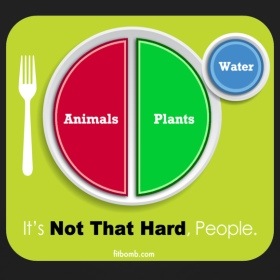
This is the "MyPlate" I'll be sticking with from now on:

Animals and plants!  I can do that!  I've done it before, and I can do it again... assuming I can get that self-control back in order, and learn to only eat when I need to, and not because I'm bored or emotional or because it's in the house.  As much as I love all of the yummy baked goods that the Paleo blogosphere has to offer, my health comes first... and optimal health for me doesn't include anything even remotely sweet.  (If you're in my position and like timed challenges, check out the Whole30 or 21-Day Sugar Detox from Balanced Bites!)


Quote of the Day:
"If you're happy, you eat.  If you're sad, you eat.  You lose a job, you eat.  You get a job, you eat.  It's, you know, it's addiction."  -Barbara Cook

Friday, June 8, 2012

The Result of a Multi-City/Country/Continent Quest for Kerrygold

Since I first became involved in the Paleosphere, I'd been hearing about the wonder that is Kerrygold butter.  I had never seen or heard of it before-- it isn't in any of the supermarkets near my home in New York (despite what the locator on the Kerrygold website says), and it wasn't in the one near Penn's campus in Philly either.  So I figured that when I went to Edinburgh, there'd be a ton of Kerrygold, given its proximity to Ireland, right?  Wrong.  So when it wasn't in Lidl, Scot-Mid, Tesco, Sainsbury's, or the Middle Eastern markets I went to, I was pretty much convinced that the Kerrygold butter gods hated me and that I'd never find it.  Maybe it was like Brigadoon: it'd only show up once every one hundred years.  Or perhaps it was like the Loch Ness monster: a myth.


During my spring break, I went on a five-city adventure that started off in Amsterdam (Argentine steakhouse heaven-- no problems finding a good steak there!), then moved to Geneva (which is so expensive that I cooked out of my hostel the entire time).  I couldn't find Kerrygold in either place.  Then I headed to Germany, where I first encountered Kerrygold in Berlin's main train station, the Hauptbahnhof.  (Berlin is Paleo heaven.  One word: Sauvage.)  I had an "Oh my god, it actually exists!!!!!" moment of both extreme disbelief and extreme excitement.  This was the butter that the entire Paleo community has been raving about!!  IT'S REAL!!!!  But since I had a four-hour train ride (to Prague) ahead of me, I couldn't hoard a brick of it to see what the big deal was.  (Well, I guess I could've...)  So I settled on some Kerrygold cheddar cheese to snack on instead.  Nom.  However, since I didn't cook at all in Prague or Vienna, I still hadn't tried the most talked-up butter in existence by the time I headed back to Edinburgh.

Fast-forward to mid-May.  Four months in Europe, and still no Kerrygold... but a trip to Dublin changed that.  I was convinced by this point that Kerrygold leprechauns would hide all of the butter before I got there, and I'd spend the rest of eternity missing out on the one butter that puts the Paleo/Primal community into an "OMG NOM" frenzy.  But no!!  I got to Dublin, and Kerrygold was everywhere-- it's even sold in the airport!!!!  AHHH!!!!!  So after sight-seeing all day, I bought a brick of it from the grocery store and headed back to my hostel to cook dinner and finally try this practically mythical butter. It did not disappoint!!!!  It's creamy, smooth, rich, delicious... and totally worth all of the hype.  It's great for both cooking and eating, and I truly don't have words that accurately describe how absolutely incredible this butter is.


I brought my Kerrygold back to Edinburgh.  They must've thought I was insane at airport security for having almost a pound of butter in my backpack!

So I finished off an incredible semester in Edinburgh by smothering everything in Kerrygold, not knowing the next time I'd get to have this fantastical butter again.
I was in for a real treat when I ended my time in Europe with a week in Mijas Costa, Malaga, Spain, for some desperately needed Vitamin D.  (Seriously: don't take the sun for granted.  After living in Scotland for a semester, just seeing the sun makes me insanely happy now.)  I never thought I'd stumble upon Kerrygold there, but I did!!!!  I hadn't even been looking for it, and it was in the supermarket!!  Vitamin D/sun and Kerrygold in the same place??  Paradise!!  My mind was also blown by finding Kerrygold on the plane ride back to the US-- sure, it was a tiny packet of it, but still!  (But thank god for it: it was the only thing I ate... the rest of the meal served was just sad.)

So what exactly is so special about Kerrygold?  It's made from the milk of grass-fed cows!  Grass-fed butter has more carotene, Vitamin A, and Vitamin K2, has a totally balanced O3:O6 ratio, and just tastes so much better than other types of butter.  This stuff is truly incredible, and if you tolerate butter and live somewhere where you can get this stuff, do it!  Really: it's that good.  (And you can also use it to make Bulletproof coffee!)

I can't believe I just wrote an entire post about Kerrygold.  But after a semester-long quest to finally find/try it, it totally deserves its own post... and all of the hype!

Quote of the Day:
"Some people would say they couldn't do without olive oil.  I could do without olive oil a lot quicker than I could do without butter."  -Paula Deen

Saturday, May 12, 2012

Don't Judge a Book By Its Cover

There is no doubt that people can be extremely judgmental about, well, everything.  From the clothes we wear to the cars we drive to the music we listen to, it seems like someone always has a negative opinion about us.  You're a slob if you're not wearing the latest fashions; you're uncultured for listening to pop music; you're a rich snob if you drive a nice car.  We spend so much of our lives being judged for our choices... yet we spend even more time being judged for what we look like.  Pick up any magazine, and chances are you'll see at least one story criticizing some celebrity for being too fat or too thin.

We are all human beings here, and I'm sure the majority of us are insecure about our looks.  So who are we to judge others?


I've struggled with weight my entire life.  I was teased in elementary and middle school for being fat (among other things), and it really sucked-- I wouldn't wish that (or any type of teasing/bullying) upon anyone!  I was ashamed of my weight and appearance, and I was an emotional eater, so I ate more to deal with that-- and until I was 13 (when I found Atkins), it was a never-ending cycle of getting picked on for my weight, and then turning to food for comfort.  (And by high school, I was overweight, the new kid, and an academic-oriented theatre geek.  Yeah... I kept turning to food.)
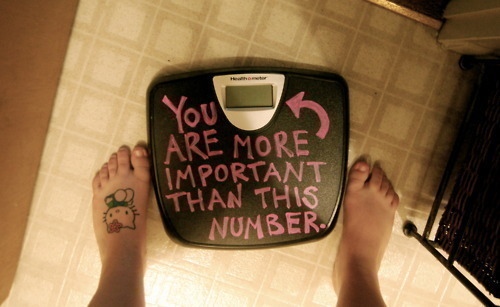
People (and especially kids) can be incredibly cruel and judgmental-- if you're not thin and beautiful, you're somehow a lesser person, regardless of your personality or talents/abilities.  That's not okay with me.  And it's never okay to pick on people for their looks (or anything else, for that matter!).  You are more than a number on the scale or the size of your jeans-- and we should view others with that idea in mind.

Our society is whack.  What mostly prompted this post is this article: "America's hatred of fat hurts obesity fight", which kind of hit home for me, given my life-long struggle with weight and being teased for it.  According to the article, "Children as young as 3 tell scientists studying [the stigmatization of obesity] that overweight people are mean, stupid, ugly and have few friends," and adults say "obese people are self-indulgent, lazy and unable to control their appetites."  Why the hell do looks and personality go hand-in-hand in our society?  And how absolutely heart-breaking is it that preschoolers have already been taught to judge others like this?  What are we doing to our kids?


Prejudice is taught, and clearly 3-year-olds already judging overweight people will keep this problem going, considering they'll go to school and start picking on and isolating any kids that they deem overweight/fat... and "targets of stigma often fall into depression or withdraw socially, both making overeating, binge eating, and a sedentary existence more likely."  This is a vicious cycle.  Americans are so obsessed with being thin (because obviously, thin = good and fat = lazy/stupid/bad) that "in a 2007 study, 24% of women and 17% of men said they would trade three or more years of life to be svelte."  Right.  So being thin-- focus on thin, not healthy-- is more important than a few more years of life.  Of course.  Look, I know that being overweight/obese puts you more at risk for health problems, but there are so many thin people with health problems too!!  The prescribed "eat less, move more" might make someone thinner, but that doesn't mean that'll make them healthier... so health care costs would still be an issue if they're sick/malnourished.


I don't consider myself to be thin.  I'm not a twig, and you won't see me in a bikini any time soon.  But I'm healthy-- I'd rather be a healthy size 6/8 than an unhealthy size 2.  The aforementioned article ends with this quote: "I work out, I eat a lot of fruits and vegetables, and I'm still not thin."  Story of my life!  In fact, just a few weeks ago, the amazing Ancestralize Me! came out with "Paleo Women are Phat", which A) is a must-read, and B) discusses why some women in the community aren't as "lean and mean" as the men.  But what I love most about this post is the emphasis on strength, health, and personality, rather than just being skinny.
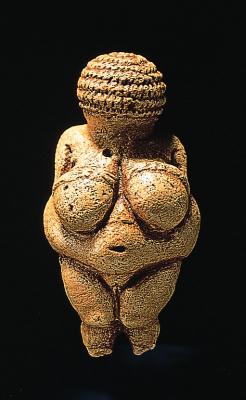
The post also features a picture of the Venus of Willendorf (which I had the pleasure of seeing on my trip to Vienna last month)-- this fat little statuette, and other "Venus figurines," were worshiped by paleolithic people.  Worshiped.  Can you imagine the majority of Americans worshiping something that wasn't thin and beautiful today?  God forbid!
The definition of beauty has been so horribly warped.  In fact, artist Anna Autopia Giordano altered some famous pieces of art (including Botticelli's "The Birth of Venus") to meet today's beauty standards in her exhibition "Venus."  Check it out.


Really, though: the saddest thing about this whole obesity crisis is that people don't seem to want to be healthy-- they just want to be thin.  The two are not synonymous.  I understand it, of course-- you'll still be judged and teased if you're a healthy size 12, because health isn't something that can be seen.  Even if your numbers are all perfect and you've cured all of your ailments and haven't been sick in months, you'll still be seen as the fat lady/guy/kid.  And that's not fair to you!  People need to back the hell off!
People's judgmental and hurtful comments also foster an attitude of Well, this is how it is, so it's okay I'm being picked on.  No.  After fat jokes were made about him at the White House Correspondents' dinner, Chris Christie stated, "When you're overweight, fair or unfair, there's going to be those who make really awful comments about you and there are going to be people who make jokes about it.  That's the way it goes." Well, that shouldn't be the way it goes!  Things need to change!  This is bullying, and it needs to stop.


Overweight/obese people are not stupid or lazy, and they shouldn't be treated as such.  You don't know their stories, and they should not be judged.  No one should be judged, bullied, made fun of, or picked on because of how they look (or what they believe in, or who they love, etc.).  What we can do, however, is educate and help others.  We can point people-- regardless of their size-- in the right direction health-wise.  We can teach people to make smart food and lifestyle choices-- to cut out processed/refined foods, to sleep and move more, to end toxic relationships and spend more time around the people they love, and to stop judging books by their covers.


Quote of the Day:
"Who are you to judge me and the life that I live?  I know that I'm not perfect and that I don't claim to be.  So before you point your fingers, be sure your hands are clean."  -Bob Marley, "Judge Not"

Tuesday, April 24, 2012

The Paleo Restaurant: Sauvage (Berlin)

I haven't been able to order absolutely everything off of a restaurant menu since January, 2010.  Since I first got into the real food lifestyle on February 1st of that year, almost every restaurant trip has left me frustrated with how little options I had... or has me driving the waiters crazy with the typical "No bread, no rice, no sauce, can I have double veggies instead?"  And except for during my trip to Paris a few months ago, I haven't ever been able to order dessert.

But that all changed when, last Tuesday, I experienced one of the best meals of my life in Berlin at Sauvage, the "world's first Paleolithic restaurant."  (I'd like to thank Paul from Living in the Ice Age for reminding me about it!)  Here is the sign that greeted me when I arrived, which made me fall in love with the place immediately:

Besides the fact that I was insanely excited about this place since making reservations the week before (seriously: make reservations if you plan on going, because this place got packed!), the following sign, displayed right when you walk in, made me really go into excitement over-drive:

!!!!!!!!!!!!!!!!!!!!!!!!!!  It is so nice to walk into a restaurant and know that I won't "get glutened" or have a terrible reaction to processed crap, vegetable oil, grain-fed meat, or hidden sugar.  It's been two years since I haven't had to worry about that, and going to Sauvage has restored my faith in eating out (though now that I'm back in the UK-- and heading back to the US in a few months-- I'm going to be sad that a Paleo restaurant doesn't exist in either country.... yet).  Words seriously can't describe how excited I was for this meal!

The restaurant only seats up to forty people, and it was so cozy-- it had a very rustic feel, and dinner was 100% by candlelight, which added to the feeling that, oh my god, I'm eating in a Paleo restaurant!

Although the menu was entirely in German, the waiters were more than happy to translate every single dish for us-- and everything sounded more delicious than the next.  My mom and I each got an appetizer: cauliflower soup with their gluten/grain-free bread and butter, and the Paleo antipasti plate, which had everything from seed-based crackers to cabbage to olives to garlic to eggs.  Both dishes were so good!


For the main course, we ordered the "Steak Sauvage"--which was 100% grass-fed with caramelized red onion, chives, capers, garlic, and green pepper-- and a veal dish with roasted cauliflower, dates, paprika, mint, and sesame.  Nom!!   


Dessert was incredible, and it was so awesome to be able to order it!!  They offered two different desserts, so we ordered both and split them.  The first one was a dark chocolate and hazelnut tort with a wild berry sauce, and the second was a lavender-honey cake with their homemade ricotta and hibiscus sauce (with an almond crust).  So yummy!!  


This meal was amazing.  (It was also pretty reasonably priced for such high-quality food.  Our appetizers were in the €6-€9 range, our entrees from €17- €23, and desserts were €4.90 and €6.90.  They also do not accept credit cards.)  Not only was the food itself absolutely delicious, but the atmosphere, staff, and everything else about the restaurant made this an experience that I will never forget. 

Thank you, Sauvage, for a truly fantastic meal and night.

Quote of the Day:
"Paleo Cuisine is based on the dietary habits of our prehistoric ancestors, but doesn't tend to mimic how prehistoric men ate.  The Modern Paleo cook combines evolutionary science with contemporary cuisine and ancestral cooking methods."  -Sauvage website

Wednesday, April 4, 2012

A Paleo Poem

Many, many years ago, our ancestors gathered and they hunted--
they lived in caves, ate off the land, and instead of talking, they grunted.
No modern diseases plagued them, for they were healthy and strong:
the antithesis of today's owrld... So then what the heck went wrong?
The cavemen lived on meat and fat, yet "experts" now claim both can kill,
so why are humans sicker now with that advice and modern pills?

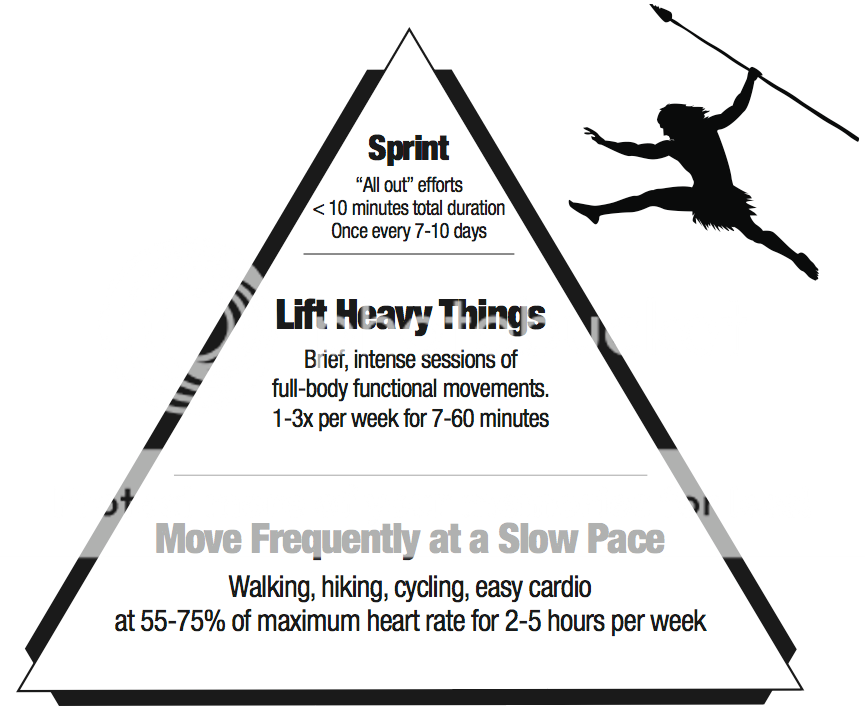
Our ancestors moved frequently, they walked and hiked at a slow pace--
and they certainly weren't chained to desks for the eight hours of the rat race.
They lifted heavy natural things, not just 5-pound weights in local gyms,
and sometimes they even sprinted (away from tigers to keep their limbs!).

They didn't have computers, phones, TVs and cable, or the iPad--
Apples and blackberries were simply fruits, and a jaguar was the next meal to be had.
Their circadian rhythms were perfect: no late nights or early mornings--
they slept with the moon and woke with the sun and had no need for electronic warnings.
There's no doubt our lifespans exceed theirs-- sure, theirs averaged thirty years,
but we have sanitation and modern medicine, while they had different fears:
infections and natural accidents, being chased by mammoths and bears--
so it's unfair to use that argument, for they had totally different cares!
But there was no obesity or cancer-- no Neolithic Agents of Disease,
no high blood pressure or autoimmune conditions, and no type-2 diabetes.


Those came only after Agriculture in about 8000 BC,
when humans shrunk and started getting sick, and changed was society.
We stopped following the wisdom of our previous generations--
we settled down and changed the Earth, and we are now just fast food nations.
We moved away from real food-- now we have packaged meals and bread,
which contains the evils gluten and wheat-- or "Satan's excrements" (as Robb said)--
that really mess up our bodies and health.  Go and read Wheat Belly,
which gives a lot of reasons why you should give up your PB & jelly.


Strange "products" run amok now, and weird chemicals lace our food--
Big Macs aren't really meat-- I doubt that "cow" had ever mooed!
"Low fat" everything lines the shelves, and you can blame that all on Keys,
who scared people out of eating fat-- but it does NOT cause heart disease!
And those "healthy whole grains" aren't healthy-- they cause your blood sugar to get scary,
and it's insulin issues that make you fat-- go check out these books by a guy named Gary.
Sugar is the new cocaine-- yet it's still legal (even though it's harmful!),
which is why food companies put it everywhere-- it keeps you buying things by the armful.
The obesity crisis is getting worse: people are fat, sick, and so unhealthy,
Big Pharma and Agribusiness don't want to help-- they just want to get wealthy.
Don't listen to government regulations-- Monsanto is tied to the FDA,
so take your health into your own hands and listen to what ancestral wisdom has to say.
Go back more than 10,000 years ago, go back to eating good fats and meat,
and fruits and veggies and nuts and seeds (and dark chocolate as an occasional treat!).

Purge the pantry of those "healthy" grains, of those legumes and snacks and boxes.
Eat wild, buy organic, and perhaps try the 30- or 21-day sugar detoxes.
Just say no to GMOs, and don't venture into center aisles,
go out in the sun and play-- you'll get both your daily Vitamin D and smiles.
Sleep a lot in a dark, dark room; lift heavy things and move...
Perhaps this all sounds overwhelming, but don't worry: you'll get in the groove.
Maybe you still need some help: have no idea what to eat daily?
Go on over to Fast Paleo, or buy this amazing book by Bill and Hayley.
Mark's Daily Apple is so helpful-- it's got a ton of information,
and check out Nom Nom Paleo for her latest culinary creation.
You can raise a family on this lifestyle too: check out Paleo Parents Stacy and Matt,
or Everyday Paleo (the book and blog)-- they'll all prove how you can do that!
Knowledge is certainly power, but most people have no nutritional knowledge of any kind,
so why not read The Paleo Solution, or Primal Body, Primal Mind,
or go back even further: check out the work by Weston A. Price,
who looked at nutrition and dental health (and found if you eat well, your teeth are nice!).
Learn to question everything: seek answers and find the truth,
don't listen blindly to doctors who don't know better-- they won't lead you to the fountain of youth!
Many answers lie simply in our past: in natural food and lots of sun,
in moving and playing and lifting and sleeping, and not needing technology to have fun.
Though the world has changed since the cavemen, we can still look to their lives
and find the keys to optimal health... because we don't just want to live: we want to thrive.

Quote of the Day:
"Poetry is when an emotion has found its thought and the thought has found words."  -Robert Frost